
Contents
About the author

Edward A. St. Germain created AmericanRevolution.org in 1996. He was an avid historian with a keen interest in the Revolutionary War and American culture and society in the 18th century. On this website, he created and collated a huge collection of articles, images, and other media pertaining to the American Revolution. Edward was also a Vietnam veteran, and his investigative skills led to a career as a private detective in later life.
Contents
New York Colony had a diverse economy centered on agriculture, fur, and maritime trade.
Fur trade
New York was first settled by the Dutch in 1624 under the name New Netherland.
The settlers established themselves in Manhattan, creating a settlement known as New Amsterdam, which would later become New York City. They also established a trading post at Fort Orange, which was located at the site of modern-day Albany.
The first economic activity established in the colony was the fur trade. This was the initial purpose for the establishment of New Netherland by the Dutch West India Company.
Native American tribes would hunt animals such as beavers and otters, and sell them to Dutch fur traders in exchange for goods such as foodstuffs, clothing, hatchets, and other metal tools.
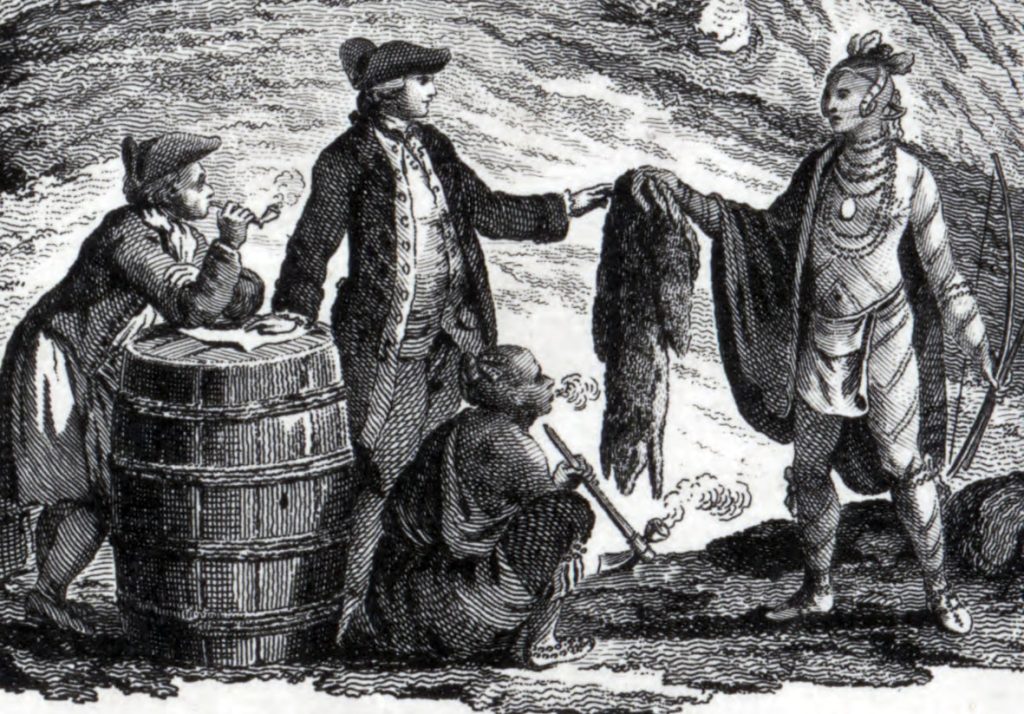
These furs were then exported to Europe, where they were worn as fashion accessories by wealthy individuals.
However, the industry soon began to struggle with a diminishing supply of animals to kill, with beavers being almost completely wiped out from the Hudson River Valley as early as 1640.
As a result, hunters began heading northwest in search of more fertile ground, which soon led to the “Beaver Wars” between French and Dutch-allied Native American tribes fighting for control of beaver stocks and trading routes.
Fur trading would continue throughout the history of New York, including after the colony was handed over to the British in 1664, with hunting centered on the colony’s remote interior.
Maritime trade
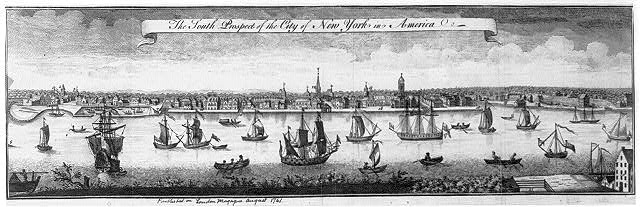
New York City quickly became one of the busiest, most important ports in the Thirteen Colonies, making it a hub of trade and economic activity.
The harbor offered easy access to the New World, with deep waters, and convenient access to other parts of the colonies through New York’s system of rivers and estuaries.
As a result, many key colonial exports ran through the port of New York, including furs, then later rum, potash (potassium salts made from ashes, used as an industrial chemical), wheat, flour, and eventually bar iron and pig iron.
Large volumes of imports would also enter the colonies through New York, including sugar/molasses (used to make rum), textiles, weapons, and salt.
The hub of economic activity around the harbor also supported a range of other maritime industries in New York, such as shipbuilding and repairing, warehousing, import/export handling, and even marine insurers and shipping brokers.
Agriculture
New York produced significant amounts of staple food crops during the colonial era.
Along with the other Middle Colonies, New York had large areas of fertile soil and a relatively moderate climate, especially compared to New England.
As a result, areas such as the Hudson River Valley and Long Island produced significant volumes of wheat, rye, corn, oats, and hay.
Many of these crops were milled locally into flour or cornmeal, for example, or sold to neighboring colonies.
Livestock was also kept, allowing colonial farmers to turn a profit selling beef, butter, pork, and mutton.
In New York, especially around the Hudson, there existed many large estates of land, known as manors, where farmers would rent certain subplots from the landlord in order to grow crops.
This was distinct from most other parts of the Thirteen Colonies, where farmers generally owned and worked on their own land.
New York was also unique in that it had a particularly large slave population compared to the rest of New England and the Middle Colonies. Many of these slaves worked on farms or at the docks in New York.
On the farms, and especially on the larger estates, many laborers were also indentured servants, who committed to work for free for a specific period of time in exchange for their passage to the Thirteen Colonies.
Other industries
The early New York economy was also supported by a number of other smaller industries, including:
- Mining and smelting – iron ore was mined in New York and forged locally into products such as anchors and weapons. However, from 1750 onwards, the British tried to restrict colonial ironworking to protect their domestic industry. From this point on, larger volumes of iron were exported as raw materials as opposed to finished products.
- Lumber such as pine and oak was harvested locally in areas such as the Adirondacks. Some of the wood was exported, and some was used by the local shipbuilding industry.
- In 1664, the first rum distillery in the Thirteen Colonies was opened on Staten Island. From then on, New York continued to produce significant volumes of the liquor, with production focused around New York City. A large proportion of New York’s rum was consumed domestically or sold elsewhere in the New World, rather than being exported abroad.
To learn more, read our article on the broader economy of the Middle Colonies.