Accents Of The Founding Fathers
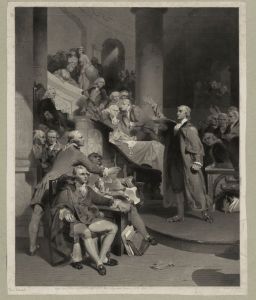
If we were to hear them speak today, most of the Founding Fathers of the United States would be considered to have an American accent, but it would have sounded…
Everything you've ever wanted to know about the American Revolution

In these articles, our historians explain different aspects of the American Revolution, helping you to understand the causes and effects of the Revolutionary War.
If we were to hear them speak today, most of the Founding Fathers of the United States would be considered to have an American accent, but it would have sounded…
1. While Virginia was the first of the Thirteen Colonies, most of the South was settled much later Virginia was first established in 1607, long before the settlers began moving…
The Federalists and Democratic-Republicans were the first two political parties in the United States. Beginning in the early 1790s during George Washington’s first term, the two factions were locked in…
Before George Washington became the first president of the United States on April 30, 1789, there were others who led the federal government in the time leading up to and…

Republican Motherhood refers to an ideology centered around the idea that women should raise patriotic, virtuous children for the good of America after the United States gained independence from Great…

The Declaration of Independence was a document adopted by the Second Continental Congress on July 4, 1776, which marked the start of the United States as an independent nation. Historical…

When George Washington announced his resignation from the office of President in late 1796, he published a farewell address, which was released as a public letter. Context After leading the…

“I have not yet begun to fight” is one of the most famous quotes of the American Revolution, declared by Captain John Paul Jones during the 1779 Battle of Flamborough…

The American Revolution had a wide range of social, political, and economic effects, both in North America and internationally. 1. America was born as an independent country The 1783 Treaty…

The Province of Georgia had a more diverse economy than many of the other Southern Colonies, but was still heavily reliant on cash crops and plantation-based farming, especially from the…

The Colony of New Jersey had a diverse economy, predominantly focused on agriculture and maritime trade, and with a number of smaller manufacturing and natural resources industries taking off in…
1. New Jersey was originally controlled by the Swedish and the Dutch Parts of the colony were formally known as New Sweden and later New Netherland, before the territory was…
1. Georgia was the last of the Thirteen Colonies to be founded The colony was formally established in 1732, under the control of a group of British trustees led by…

Georgia was a pluralistic, diverse colony, inhabited by a wide range of different religious groups. However, Catholics were excluded from the colony from the very beginning. Founding and early history…

New Jersey was one of the most religiously diverse of the Thirteen Colonies, with no official church, and no significant religious majority. Founding and early history Prior to its capture…
1. South Carolina and North Carolina were originally part of the same colony The Province of Carolina was established in 1663, and originally contained parts of modern-day Georgia, Tennessee, Alabama,…
South Carolina was officially Anglican during the colonial period, and from the early 1700s, the Church of England was the official church of the colony. However, South Carolina was settled…

The economy of the Southern Colonies was primarily centered on the region’s plantation farms, with crops such as tobacco, indigo, and rice being key exports for the region. Plantations and…

The Southern Colonies had large swathes of flat, fertile land, which along with its warm climate and system of waterways, made the region perfect for plantation-based farming. Terrain The terrain…

The New England colonies were largely dominated by the Congregationalist Puritan movement, with a close connection between church and state, and little tolerance for religious dissenters. The exception was Rhode…

The Middle Colonies were religiously pluralistic, home to a diverse range of different religions, including Quakers, Presbyterians, Lutherans, and Mennonites, as well as a small minority of Jews and Catholics.…

The Southern Colonies in British North America were predominantly Anglican, but a wide variety of different religious sects coexisted in the region, including Presbyterians, Quakers, Baptists, and Catholics. Early years…
1. North Carolina was first settled by the British in 1585 Sir Walter Raleigh attempted to create England’s first settlement in the New World – a military outpost on Roanoke…

North Carolina was officially an Anglican colony. However, in practice, there was strong freedom of religion in the settlement, and Quakers became a dominant force in the colony’s early history,…
1. Delaware was first settled by the Swedish The area that would go on to become Delaware was first colonized in 1638 by Sweden, before the territory was captured by…

Delaware was a religiously diverse colony founded on Quaker principles, and was home to a number of other religious denominations such as Lutherans, Mennonites, and Presbyterians. Founding and British capture…

New York Colony had a diverse, varied religious history, in large part due to the range of different groups that settled in the province under both Dutch and British rule.…
1. Virginia was the first of the Thirteen Colonies to be settled Virginia was first colonized by an expedition of 105 British settlers in 1607, who established the colony’s first…

The economy of Virginia Colony was predominantly based on tobacco cultivation and export, though the province had a number of other smaller industries as well. Tobacco When Virginia was first…

During its early history, Virginia was a predominantly Anglican colony, with the Church of England established as the official religion of the province. Founding Virginia was first settled in 1607…
1. Massachusetts was founded as a Puritan model society Puritans were a type of devout Protestant Christians who believed in strict adherence to religious moral codes, and wanted to “purify”…

The Massachusetts Bay Colony’s economy was spread out across a number of different industries, with a large reliance on lumber, rum, and the seafood trade. Rum Massachusetts Bay had a…

Massachusetts Bay was a Puritan theocracy, with religion affecting many aspects of the colonists’ lives and society. Founding Massachusetts was settled by English Congregational Puritans in 1628. Puritanism was a…
1. New Hampshire was initially settled in 1623, but did not receive a royal charter and officially become a colony until 1679 The colony began as a series of small…

The Colony of New Hampshire had a relatively diverse economy, primarily centered on the lumber and fishing industries. Lumber New Hampshire had abundant forests, including many populated by white pine…

The Province of New Hampshire was initially settled mostly by Puritans, but was more accepting of other denominations compared to colonies like Massachusetts, and gradually became more religiously diverse as…
1. Pennsylvania was founded as a Quaker model society William Penn established the colony as a “holy experiment” in 1682, modeling Pennsylvania’s governance on principles of peace, democracy, and religious…

Pennsylvania was founded as a model society based on Quaker values in the New World, which quickly became one of the most religiously diverse of the Thirteen Colonies. Founding principles…

The colonial Pennsylvania economy was diverse, though it had a particularly heavy emphasis on staple food crops such as wheat and maize. Agriculture The soil in Pennsylvania was particularly fertile…
1. New York was originally called New Netherland New York was first colonized by the Dutch in 1624. They called the settlement New Nederland, and New York City was called…

New York Colony had a diverse economy centered on agriculture, fur, and maritime trade. Fur trade New York was first settled by the Dutch in 1624 under the name New…

Maryland Colony was founded in 1634 by English settlers supported by King Charles I, with the goal of creating a safe haven for Catholics in the New World. History Founding…

The Battle of Long Island, also known as the Battle of Brooklyn, was fought between the British and Continental Army on August 27-29, 1776, during the New York and New…

The Loyal Nine (also known as the Loyall Nine) were one of the first organized resistance groups against British overreach in colonial America. Establishment In March 1765, the British implemented…

Connecticut Colony, also known as the Connecticut River Colony, was founded by English settlers in America in 1636. History Founding Massachusetts Bay was one of the first English colonies in…

The Colony of Rhode Island, also known as the Colony of Rhode Island and Providence Plantations, was founded by English settlers in America in 1636. History One of the first…

British mercantilist economic policy had a significant effect on the Thirteen Colonies in America, contributing to colonial resentment of the British government from 1763 onwards. What is mercantilism? Mercantilism is…

The government structure and political environment in the Middle Colonies varied from colony to colony, but generally emphasized greater levels of religious freedom and citizen participation compared to other regions…
1. The Middle Colonies were the most ethnically diverse in British North America While New England and the Southern Colonies were predominantly inhabited by migrants of English descent, with a…

The Middle Colonies of Delaware, New Jersey, New York, and Pennsylvania produced a diverse economic output, with a focus on farming, leading to this region becoming known as the “breadbasket”…

The Battle of Lexington and Concord was fought on April 19, 1775, and marked the beginning of the American Revolutionary War. Context In the spring of 1775, conflict between the…

The Battle of Valcour Island was fought between the British and Continental Navies on October 11, 1776, on Lake Champlain, along the borders of New York and Vermont. This was…

The New York and New Jersey Campaign was a series of battles fought for control of New York City and the state of New Jersey during the Revolutionary War, between…
The Philadelphia Campaign refers to the fight for control of Philadelphia, Pennsylvania, from 1777 to 1778 during the Revolutionary War. The British succeeded in capturing Philadelphia in September, 1777, but…
The Southern Campaign was a series of battles fought between Loyalist and Patriot forces in the southern colonies in America from 1778 to 1781. These battles, and the eventual failure…

The Saratoga Campaign was a series of battles fought between the British and Continental Armies in 1777 during the Revolutionary War. The campaign was a failure for the British Army,…

The Battle of Monmouth was fought at Monmouth Courthouse, near Freehold and Manalapan, New Jersey, on June 28, 1778. This was one of the largest battles of the Revolutionary War…

The Battle of Guilford Courthouse was fought between the British Army and Continental Army near present-day Greensboro, North Carolina, on March 15, 1781. The British won the battle but suffered…

The Battle of Cowpens was fought between Patriot and British forces near Chesnee, South Carolina, on January 17, 1781. The battle resulted in an important victory for the Continental Army,…

The Siege of Charleston was a battle fought from March 29 to May 12, 1780, during the Southern Campaign of the American Revolution. The siege ended in a major victory…

The Battle of Princeton was fought between the Continental Army and the British Army on January 3, 1777. Following victory at the Battle of Trenton eight days earlier, George Washington‘s…

The Battle of Trenton was fought between the Continental Army and German Hessian forces in Trenton, New Jersey on December 26, 1776. Though a relatively small battle, Trenton was a…

The Battle of Yorktown, also known as the Siege of Yorktown, was fought between the British Army and the combined forces of the French and Continental Armies between September 28…

The Battles of Saratoga were fought on September 19th and October 7th, 1777, between the British Army and the Continental Army near the village of Saratoga, New York. Summary Leadup…

The Battle of Bunker Hill was one of the early major conflicts of the American Revolution, fought on June 17, 1775, in Charlestown, Massachusetts. The British Army won the battle,…

The Albany Plan of Union was a 1754 proposal to create a central government for the Thirteen Colonies in North America, spearheaded by Benjamin Franklin. Context In the early 1750s,…

Pontiac’s Rebellion, also known as Pontiac’s War, was an uprising of the Native American population against settlers in the Thirteen Colonies, which lasted from 1763 to 1766. Context and causes…

Bacon’s Rebellion was the first major uprising by American colonists against colonial leadership in the Thirteen Colonies, a hundred years prior to the beginning of the American Revolution. Context and…
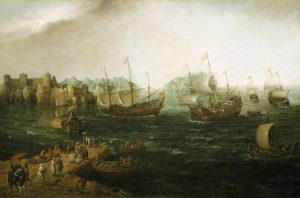
Salutary neglect was an unofficial policy of Great Britain in the 18th century, whereby its American colonies were largely left to govern themselves, and British laws and regulations, especially those…

The Pine Tree Riot was one of the earliest significant acts of rebellion against British authorities in the Thirteen Colonies, preceding much more well-known acts of resistance such as the…

The New England colonies’ geography restricted the types of crops that farmers could plant, and often made early settlement difficult, due to extremely harsh winters. However, the geography also opened…

The New England Colonies of Massachusetts Bay, Rhode Island, Plymouth Colony, New Hampshire, and Connecticut had largely democratic political systems. However, democratic participation was limited to certain social groups, and…

During the 18th century, the New England colonial economies of Massachusetts, Rhode Island, Connecticut, and New Hampshire relied heavily on the timber and fishing industries, with support from other areas…

Origins Join, or Die is a political cartoon drawn by Benjamin Franklin, originally published in the Pennsylvania Gazette on May 9, 1754. The cartoon depicts a rattlesnake cut into eight…
The Enlightenment was an intellectual and philosophical movement that originated in Europe in the mid-to-late 17th century, lasting until the early 19th century. The Age of Enlightenment, or the Age…

The Great Awakening (also known as the First Great Awakening) was a Christian spiritual revival that occurred in the Thirteen Colonies in the 1730s and 1740s. What was the Great…

The French and Indian War was a conflict fought by the Thirteen Colonies and the British Army against the French, with different Native American tribes supporting both sides, from 1754…

The Suffolk Resolves were a series of declarations passed on September 9, 1774, by delegates from towns in Suffolk County, Massachusetts, calling for opposition against the British Intolerable Acts. Summary…

Letters from a Farmer in Pennsylvania, to the Inhabitants of the British Colonies was a series of essays written by John Dickinson, a lawyer from Pennsylvania, in late 1767 and early…

Common Sense was a political pamphlet published by American Patriot Thomas Paine on January 10, 1776, advocating for American independence from Great Britain. Summary The second half of 1775 was…
The Committees of Correspondence were groups of Patriot leaders that sought to organize inter-colonial cooperation and resistance to British rule, in the lead-up to and during the American Revolution. Summary…

The Daughters of Liberty was a group of Patriot women that helped promote resistance to British oppression in the lead-up to the American Revolution. Who they were The Daughters of…
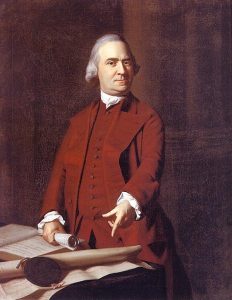
The Sons of Liberty was an underground Patriot political organization that formed in the Thirteen Colonies in the lead-up to the American Revolution. From 1765 until the start of the…

The Powder Alarm was a false alarm for the start of the American Revolution. It occurred on September 1, 1774 in what is now Somerville, Massachusetts. In this article, we’ve…

The Olive Branch Petition was a document drafted by the Second Continental Congress and sent to King George III of England, in an attempt to prevent the Revolutionary War. In…

The Second Continental Congress was a convention of colonial delegates that began meeting in May 1775 in Philadelphia, Pennsylvania, soon after the beginning of the Revolutionary War. In this guide,…
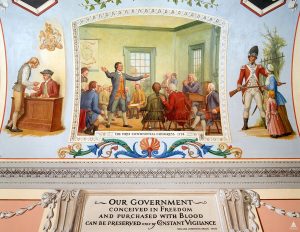
The First Continental Congress, which occurred in Philadelphia in September and October 1774, was the first major unified colonial response to British overreach in America. In this article, we’ve summarized…
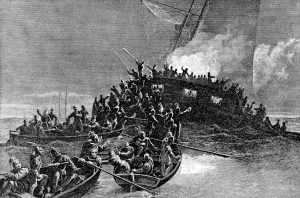
The Burning of the Gaspee, also known as the Gaspee Affair, was an act of colonial resistance against British customs officials. The incident occurred off the coast of Warwick, Rhode Island, on the night…
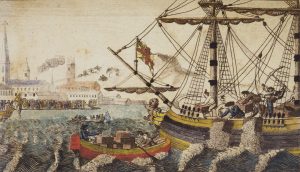
The Boston Tea Party was an act of rebellion against the British government that occurred in Boston on December 16, 1773. In this article, we’ve explained what happened during the…
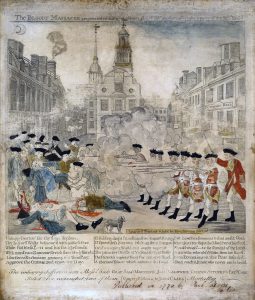
The Boston Massacre was an incident that occurred on March 5, 1770, where a group of British soldiers fired into a crowd of civilians on King Street in Boston. In…
The Quebec Act was a law passed by British parliament in 1774, which expanded the territory of the Province of Quebec, and opened up religious freedoms for citizens of the…
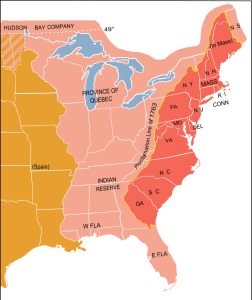
The Royal Proclamation of 1763 was a decree issued by King George III of Great Britain, defining new restrictions on colonial settlement in America. In this article, we’ve explained the…
The Navigation Acts were a series of laws that regulated foreign trade across the British Empire during the 17th and 18th centuries. In this guide, we’ve explained what the Navigation…
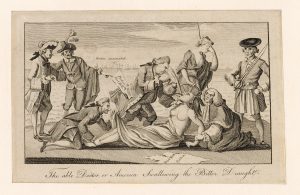
The Intolerable Acts, also known as the Coercive Acts, were a series of controversial laws passed in the Thirteen Colonies in America by the British parliament. In this guide, we’ve…
What was the Tea Act? The Tea Act was a new law implemented by the British parliament on May 10, 1773. The new law stated that: The East India Company…
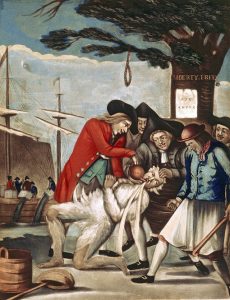
The Tea Act of 1773 was a law implemented by the British parliament, which gave the British East India Company an effective monopoly on tea sold in the Thirteen Colonies.…
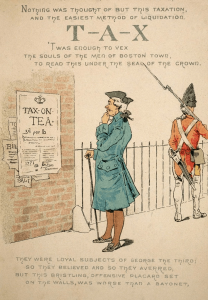
The Townshend Acts were a series of laws enacted by the British parliament between 1767 and 1768, which imposed a range of new taxes and restrictions on the Thirteen Colonies…
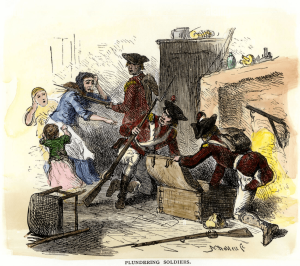
The Quartering Acts were a series of laws implemented by the British parliament. The laws stated that the Thirteen Colonies in America had to provide housing and other supplies to…
The Sugar Act of 1764 was a law passed by the British parliament on the Thirteen Colonies. The act imposed stricter trade controls and updated tax rules, making it harder…
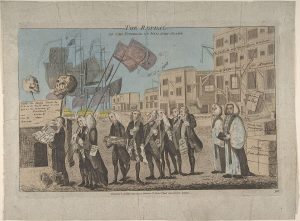
The Declaratory Act was a law implemented by the British parliament in 1766. It stated that the British government had the complete authority to pass laws in the Thirteen Colonies,…