
Contents
About the author

Edward A. St. Germain created AmericanRevolution.org in 1996. He was an avid historian with a keen interest in the Revolutionary War and American culture and society in the 18th century. On this website, he created and collated a huge collection of articles, images, and other media pertaining to the American Revolution. Edward was also a Vietnam veteran, and his investigative skills led to a career as a private detective in later life.
Contents
The Colony of New Hampshire had a relatively diverse economy, primarily centered on the lumber and fishing industries.
Lumber
New Hampshire had abundant forests, including many populated by white pine trees, which were in high demand for use as ships’ masts.
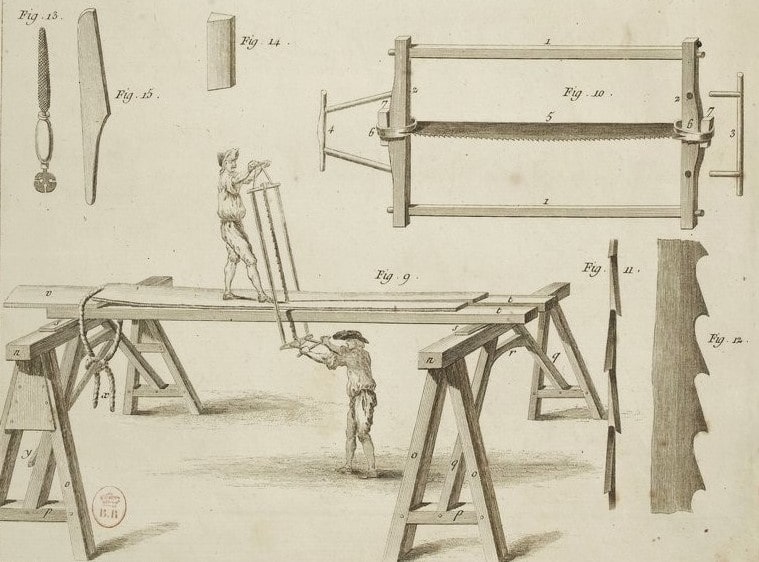
Logging took place throughout New Hampshire, including in the Connecticut River Valley, along the Piscataqua River, and in the Lakes Region.
For ease of transport, the lumber industry was clustered around the colony’s waterways, where timber would be sent downstream to local sawmills for processing.
Lumber was either processed and exported as a raw material, or turned into other products such as barrel staves or ship timber.
The Royal Navy wanted to reserve most of New Hampshire’s best pines over a certain diameter in size for use on their warships, as they were dead straight, lightweight, and rot-resistant, perfect for use as masts.
On the other hand, colonial merchants wanted to use the trees on their own ships, or sell them freely for a fair market price.
This sometimes led to disagreements about who could cut down certain reserved trees, or export certain logs, eventually leading to the Pine Tree Riot on April 14, 1772.
Fishing
New Hampshire had a thriving fishing industry, especially along the coast, with the ocean providing much of the colony’s food.
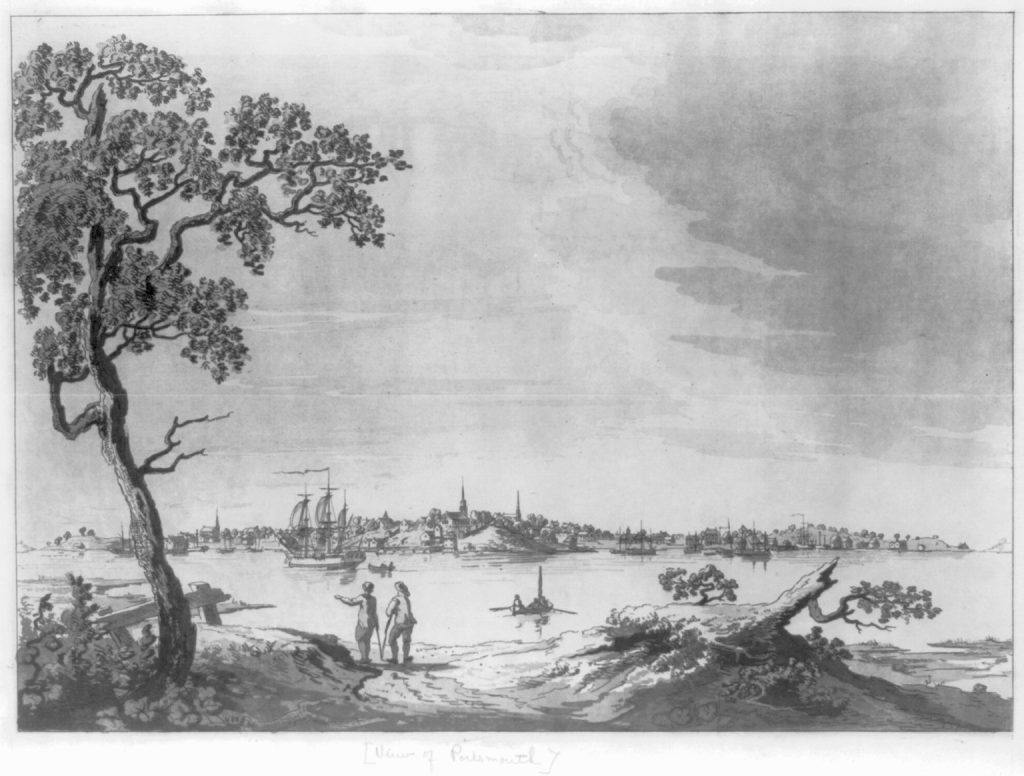
Cod was the primary catch, and was exported throughout the colonies and overseas once preserved. The fish would be dried and salted to create a durable product, which could be sold to merchants in the West Indies and Europe.
Large volumes of mackerel, shellfish, oysters, and other marine life were also caught and eaten fresh locally, or preserved for export.
The fisheries industry was also a driver of triangular trade for New Hampshire.
Europe would export manufactured goods to West Africa. Slave traders would then ship slaves to the American colonies, including New Hampshire, beginning in the late 1600s. The final leg of the triangle was colonial exports of foodstuffs and other goods back to Europe, which was predominantly seafood and lumber in New Hampshire’s case.
Shipbuilding
Thanks to its extensive coastal access and quality of forests, New Hampshire quickly became a shipbuilding hub in the Thirteen Colonies.
The industry was centered around Portsmouth, though shipbuilding also took place at Dover and Exeter. Alongside other hubs like New York, New Hampshire was home to some of the most skilled shipbuilders in the Thirteen Colonies.
Ships became an important export for New Hampshire, and the industry also supported a wide range of ancillary businesses on the docks, such as ropewalks (rope spinning/manufacturing), carpentry, and sail-making.
Agriculture
New Hampshire had large numbers of small, family-run farms in certain areas, but did not produce as much agricultural output as the Middle and Southern colonies.
The soil in the province was rocky, making it suboptimal for farming, and the growing season was short due to the relatively cold climate.
New Hampshire produced its own wheat, corn, oats, rye, and other food crops, and had a number of apple orchards. Many farmers also kept livestock such as sheep, pigs, and cows.
However, the colony did not produce large quantities of agricultural surpluses that could be exported. Instead, foodstuffs were often imported from the Middle Colonies, and sugar and molasses were brought in from the West Indies.
Slavery
The New Hampshire economy relied on Native American and African slaves, but did not have as high a slave population as the Southern Colonies did.
Elsewhere in the Thirteen Colonies, slaves worked predominantly on plantations and farms, producing tobacco, wheat, rice, and other goods that could be exported to Europe.
However, New Hampshire did not supply large amounts of agricultural exports, so rather than working in the fields, slaves acted as servants in the houses of those who could afford them.
They were also forced to work on the docks in New Hampshire’s fishing and shipbuilding industries.
To learn more, read our article on the broader economy of colonial New England.