
Contents
About the author

Edward A. St. Germain created AmericanRevolution.org in 1996. He was an avid historian with a keen interest in the Revolutionary War and American culture and society in the 18th century. On this website, he created and collated a huge collection of articles, images, and other media pertaining to the American Revolution. Edward was also a Vietnam veteran, and his investigative skills led to a career as a private detective in later life.
Contents
The American Revolution had a wide range of social, political, and economic effects, both in North America and internationally.
1. America was born as an independent country
The 1783 Treaty of Paris established the United States of America as a new country, separate from Great Britain.
The country’s borders were defined as British Canada to the north, the Atlantic Ocean to the east, Spanish Florida to the south, and the Mississippi River to the west – approximately doubling the initial size of the territory compared to the original claims of the Thirteen Colonies.
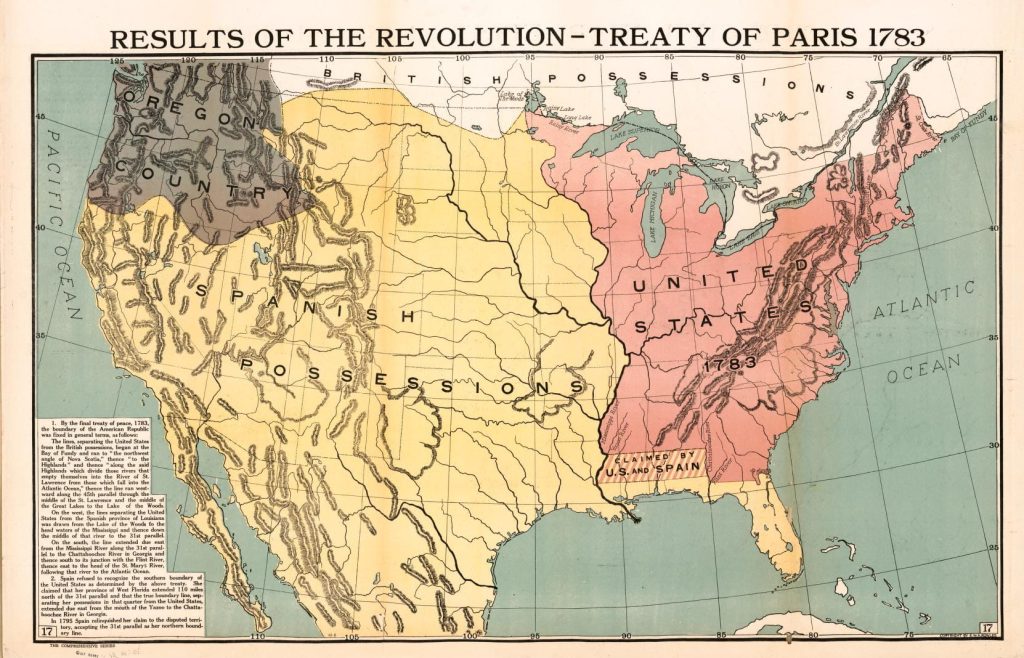
America was now an independent political power in the Atlantic that other countries could trade and develop foreign relations with.
2. American daily life became more egalitarian and more democratic, though women were left out
A much larger number of people were able to vote and participate in politics after the American Revolution, and on the whole, society became more egalitarian – though this did not benefit everyone equally.
Previously, only white males who met certain wealth requirements (usually property ownership) were allowed to vote in most of the Thirteen Colonies, and some provinces also prohibited certain religious groups, especially Catholics, from voting.
The Constitution of the United States allowed states to set their own voting requirements, and many began to remove these types of restrictions throughout the 1790s and early 1800s.
Some states, such as Georgia and New Hampshire, removed the property ownership requirement. Other states allowed freed slaves to vote, while Vermont allowed all men to cast a ballot.
However, with few exceptions, women were still not allowed to vote in most American states until 1920.
As well as political changes, British aristocratic culture was quickly dismantled after the Revolutionary War. For example, rules around primogeniture and entail were abolished, meaning that inherited estates were split equally among siblings, rather than being passed on in their entirety to the eldest male relative by default.
The social hierarchy was flattened somewhat, though there remained an elite upper class, predominantly consisting of plantation owners. The difference was, there was no longer deference in society to certain social groups such as the aristocracy, the Crown, or persons with a specific title, such as lords or knights.
Instead, men were largely seen as equals, regardless of their background, with the exception of indigenous peoples and African Americans.
3. American governance and politics began evolving towards the structure we know today
The initial governance structure of the United States had some teething issues, which needed to be worked out.
Under America’s first constitution, known as the Articles of Confederation, the federal government was ineffective and weak. It could not effectively collect taxes or regulate trade with other nations.
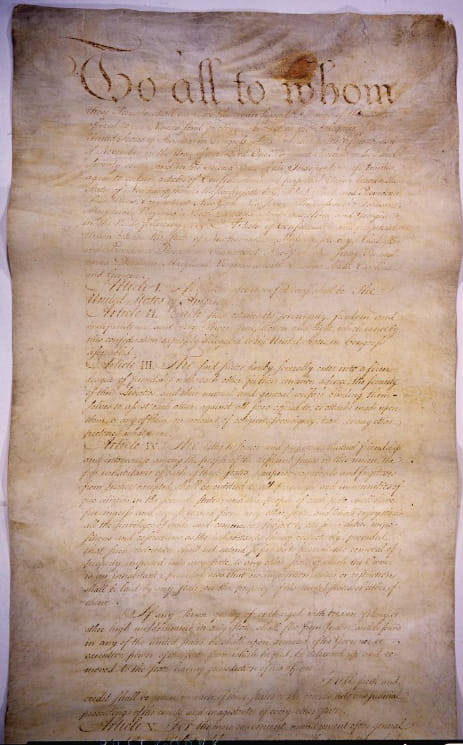
Instead, these matters were largely left up to the states, and the initial governance of the country was haphazard and inconsistent. This contributed to financial difficulties and unrest in response to state government taxes, such as Shays’s Rebellion in Massachusetts in 1786.
In 1788, the new Constitution of the United States was ratified, giving the federal government increased power. This allowed it to begin establishing the civil structures of the country that we know today, such as the court system, and the Bill of Rights.
This restructuring of the federal government also led to the formation of a two-party political system. This initially pitted Federalists, who favored a strong federal government, against Democratic-Republicans, who fought for states’ rights.
4. American victory inspired foreign democracy movements
American victory in the Revolutionary War was completely unexpected, especially in the early stages of the war.
Therefore, when the American Revolution was successful, this inspired other countries’ democratic and anti-colonial movements in Europe and South America, to various degrees.
- The French Revolution from 1789 to 1799 focused on many of the same ideals as the American Revolution, including liberty, democracy, and anti-aristocracy. Though other factors were involved, such as economic difficulties in the country at the time, France provided ongoing support to the Patriots during the Revolutionary War, meaning that many of the movement’s leaders, such as the Marquis de Lafayette, were directly involved in both the French and American Revolutions.
- The Haitian Revolution from 1791 to 1804 was a successful slave uprising against French colonial rule. It was again based on ideals of freedom and democracy, and its leaders were likely inspired by the Patriots’ success in fighting back against unfair, undemocratic colonial governance.
- The American Revolution provided a blueprint for the Colombian War of Independence from 1810 to 1819, where colonists successfully rose up against Spanish rule. Leaders such as Simón Bolívar were inspired by the Patriots’ success, as well as broader enlightenment ideals of democracy and freedom. Though, the movement was also partly a response to Napoleon Bonaparte’s capture of Spain, which delegitimized the nation’s leadership in the eyes of the colonists.
Beginning with the American Revolutionary War, this period of time in the late 18th and early 19th centuries is known as the Age of Revolution.
After Colombia, many other pro-democracy revolutionary movements successfully rose up against colonial rule in South American countries such as Ecuador, Argentina, Peru, and Bolivia.
5. The British Empire shifted its focus to the Asia-Pacific
The loss of the Thirteen Colonies led the British Empire to focus its efforts elsewhere to continue profiting from the exploitation of overseas territory.
Existing colonies in Canada and the West Indies became core economic drivers, and the British also began to settle Australia and New Zealand during the 1800s.
India and South Africa were also key British assets, and the empire continued to accumulate territory around the globe throughout the 19th century.
The loss of the Thirteen Colonies was damaging to the British Empire in the short term as the conflict was very expensive, and the nation had to cede a huge amount of territory as a result of its defeat.
However, the British quickly pivoted to establishing the “Second British Empire” focused on the Asia-Pacific and Africa, which proved to be very profitable during the 19th and early 20th centuries.
6. Religious diversity expanded
Many of the Thirteen Colonies were founded as religious model societies, or were governed based on specific religious ideals.
In some colonies, certain Protestant denominations were prevented from running for office, or at times excluded entirely. And in most regions, Catholics were heavily discriminated against, often forced to practice their religion in private.
However, after the American Revolution, a greater separation of church and state was put in place, and religious tolerance and diversity expanded gradually during the early-to-mid 1800s.
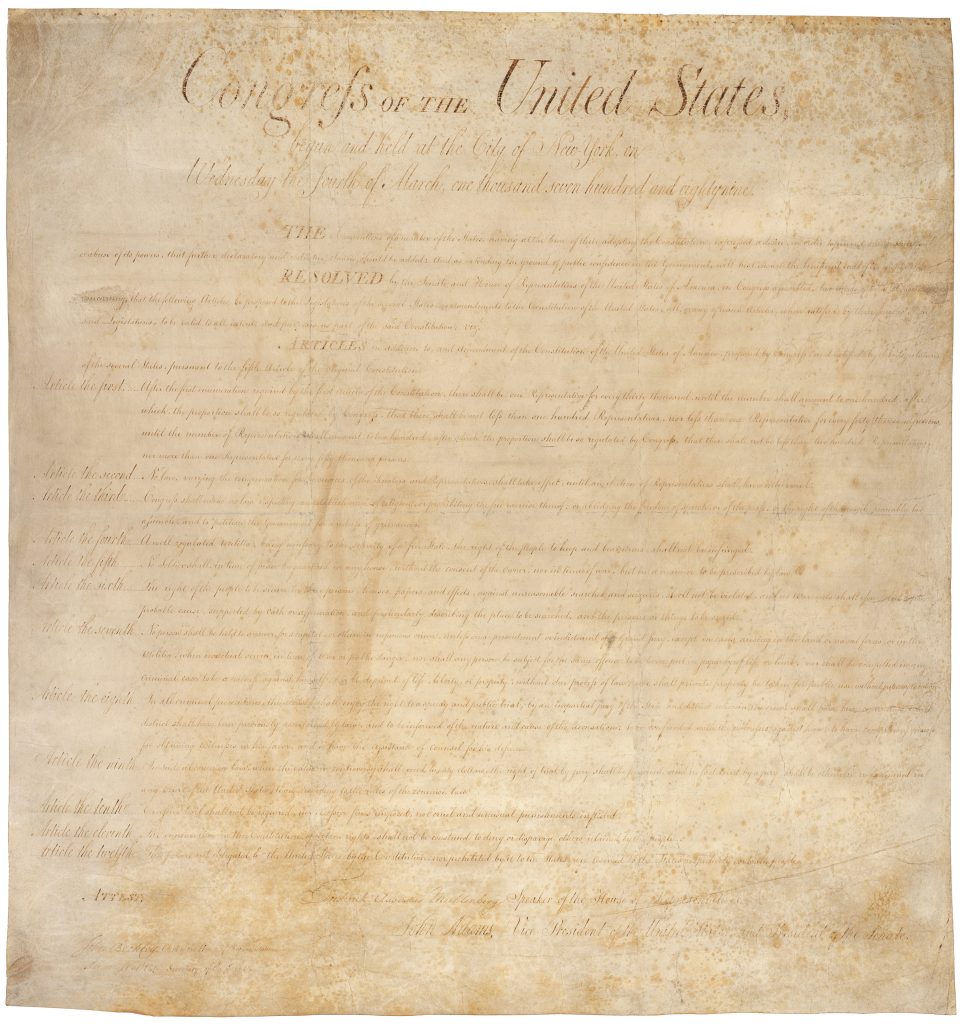
The First Amendment to the Constitution allowed for religious freedom at a federal level. This was not universally applied in all states to begin with, but it had benefits for many religious minorities.
For example, Catholics were more freely able to practice their faith, and the first American Roman Catholic Bishop, John Carroll, was appointed in 1789.
Diversity within the Protestant movement also increased as the Methodist and Baptist movements grew, and the funding of state-supported churches through taxation finally ended after Massachusetts became the last state to cease the practice in 1833.
7. Many states experienced short-term economic pain
Though they could now export goods unencumbered, many American states went through significant economic hardship after the Revolutionary War ended.
The Continental Congress borrowed millions of dollars from the French and Dutch governments during the American Revolution, and millions of dollars were raised from private citizens through war bonds as well.
This money had to be repaid and further loans negotiated, severely limiting the amount of financial assistance Congress could provide to the states in the 1780s and 1790s.
Furthermore, many economically important parts of the former Thirteen Colonies were destroyed by fighting during the war. The South’s plantations, which were a key driver of economic growth, were severely affected, and took a long time to recover after the conflict ended.
As a result, there were supply shortages in many parts of America after the country was initially founded, and cities and rural areas alike struggled with high rates of unemployment.
8. America began to trade freely
Unencumbered by the British, America was free to trade with whichever country it chose, and was quick to try and take advantage of this.
After overcoming the initial post-war economic depression, America began trading heavily with the Netherlands, Spain, and France, and their respective overseas territories. A trade route to China was even established in 1784, allowing merchants to exchange furs and ginseng for products such as porcelain and textiles.
Trade with Great Britain continued, but was bogged down in hostility and tariff disputes. While America could continue to import tools, machinery, and other essential manufactured goods, the British began to interfere with American exports – imposing tariffs, refusing shipments, confiscating cargo destined for other nations, and sometimes attempting to force American sailors to join the British Navy – a process known as impressment.
9. Seizure of Native American lands expanded
With the war over, America once again turned its attention to the western frontier, searching for new lands to settle and economically exploit.
This included territory that Britain officially handed over to America under the Treaty of Paris, but which was still inhabited by indigenous tribes.
As a result, in the short-to-medium term, millions of acres of land were seized by force from Native populations as the new America began to expand its settlements westwards, beyond the Appalachian Mountains.
Also, many Native American tribes in the east allied themselves with the British Army during the war, and with no one to protect their settlements, they soon found themselves displaced once Great Britain withdrew from the region.
10. Attitudes towards slavery were split
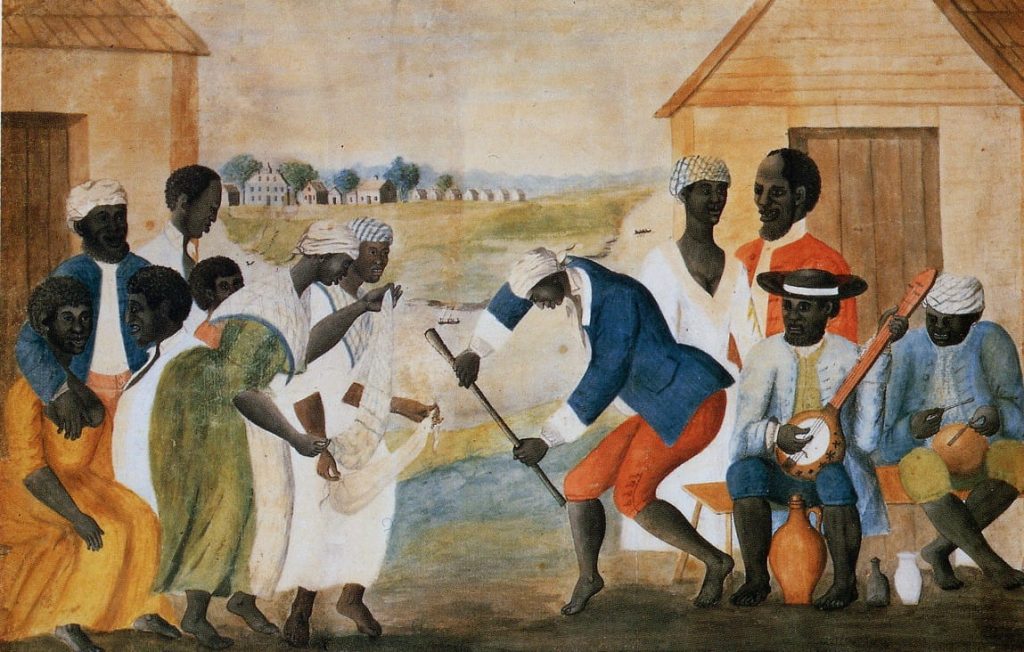
Slavery continued or expanded in many areas of America after the Revolutionary War, especially in the South.
The economies of plantation colonies such as South Carolina were reliant on slavery, and therefore continued with the practice after the war was over. However, some northern states and the federal government began to gradually move away from slavery.
Pennsylvania, Massachusetts, Connecticut, and Rhode Island passed laws to allow for the gradual emancipation of enslaved persons in the 1780s. And in 1807, Congress passed the Act Prohibiting the Importation of Slaves, banning enslaved people from being brought into the country.
Despite this, in the South, the slave trade expanded, fueled by the increasing profitability of cotton farming. Though importing slaves was forbidden, the industry was sustained by the purchase and sale of the children of previously-imported slaves.
And at a federal level, protections were kept in place to protect the value of the people that slaveowners held. For example, the 1793 Fugitive Slave Act created a legal process to return African Americans fleeing from the South to the North of the country.
These tensions around slavery and other disagreements between the two halves of America eventually led to the American Civil War from 1861 to 1865.