Contents
About the author

Edward A. St. Germain created AmericanRevolution.org in 1996. He was an avid historian with a keen interest in the Revolutionary War and American culture and society in the 18th century. On this website, he created and collated a huge collection of articles, images, and other media pertaining to the American Revolution. Edward was also a Vietnam veteran, and his investigative skills led to a career as a private detective in later life.
Contents
Pennsylvania was founded as a model society based on Quaker values in the New World, which quickly became one of the most religiously diverse of the Thirteen Colonies.
Founding principles
Pennsylvania was the twelfth of the Thirteen Colonies to be established in America, founded by William Penn in 1682.
Earlier on, the first British settlements in the New World were founded based on strict religious values.
For example, Massachusetts was settled by Puritans, who implemented strict religious principles in governing the province. There was little separation of church and state, and little tolerance for other religious denominations.
Therefore, other settlers soon moved away from Massachusetts to establish separate settlements with greater religious freedom, such as Roger Williams, who founded Rhode Island in 1636.
When William Penn was granted the rights to establish Pennsylvania in 1681, he decided to create a settlement based on Quaker principles and governance, which he described as a “holy experiment.”
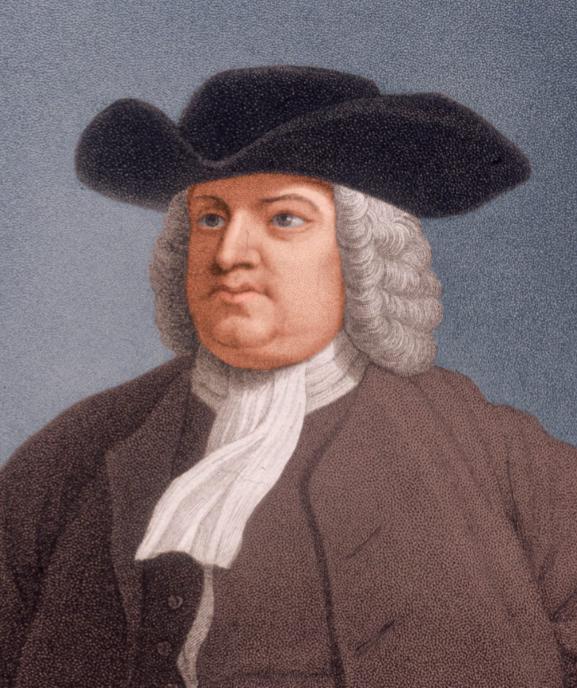
Penn essentially wanted to create a model society based on Quaker principles of peace, liberty of conscience, democracy, and strong participation in society.
To fully establish these principles, the Quakers required their own colony and control over its governance – the experiment could not take place under the governance structure of another church in a different province – leading to the establishment of Pennsylvania.
Religious governance
Pennsylvania was unique in that the colony did not have an official church.
Under William Penn’s Frame of Government (also known as the 1682 Frame) and later the 1701 Charter of Privileges, all people who acknowledged God were welcomed into the colony.
Under the original Pennsylvania constitution, there was no prescribed church associated with the colony’s government, and no one was compelled to support a specific religion.
This meant that there were no church taxes that had to be paid, unlike in most other colonies in British North America. For example, in Maryland, there was a parish tax that had to be paid to the Anglican church, no matter the resident’s religious denomination.
As a result, from the very beginning, Pennsylvania appealed to migrants from a wide range of different religious denominations, and quickly became quite a diverse colony. As well as Quakers, there were significant numbers of Mennonites, Anglicans, Baptists, and Jews that settled in Pennsylvania in the late 1600s and early 1700s.
However, Catholics were often barred from public office and generally prejudiced against, as Protestants (including Quakers) did not trust them.
At the time, in England, Catholics and Protestants were arch-enemies, constantly vying for control of the country. Protestants feared that Catholics were loyal to the Pope, a foreign power, rather than to the colonial government.
Quakers are opposed to swearing oaths on the Bible, such as saying “so help me God,” because they believe this implies that one’s regular speech is not always truthful.
Therefore, Pennsylvania was unique in that government officials were allowed to affirm their truthfulness when taking office, without invoking God by name – though they were still required to pledge their Christian beliefs.
Pennsylvania was also the first colony to formally denounce slavery under the 1688 Germantown Petition, and slave ownership was looked down upon in the province. A Quaker group called the Philadelphia Yearly Meeting appointed a committee to visit slave owners and request that they be freed.
Quaker withdrawal from government
For most of its early history, Quakers maintained control of the Pennsylvania government, and largely succeeded in establishing the model society based on Quaker principles that they hoped to create.
However, Quaker ideals began to erode over time, especially in the mid-1700s.
Early on, the Quakers maintained peaceful relationships with the Native American population, for example by negotiating and exchanging goods in return for land ownership, rather than seizing it by force.
But in 1737, William Penn’s sons, who were not Quakers, scammed the Lenape tribe out of around a million acres of territory. The Penns produced a document stating that the tribe agreed to sell a rectangular portion of land with a vertical border extending “as far as a man could walk in a day and a half” – a common American Indian unit of measurement – then hired professional athletes to prove their claim, running twice as far as the distance that the Lenape had in mind.
Quaker values also weakened when Pennsylvania came under threat from foreign military powers during the mid-18th century.
The Quakers were pacifists, and did not believe in organizing militias or fighting wars. But at the same time, following the start of the French and Indian War in 1754, Pennsylvania and other British colonies came under threat, and had to prepare to defend themselves.
Realizing that militarization was inevitable, many Quaker politicians resigned in 1756, leading them to lose control of the legislative assembly.
The power vacuum was filled by an anti-proprietary movement, with Benjamin Franklin as one of its leaders, which rallied against the Penn family’s control of the colony. Presbyterian frontier members, Anglicans, and many German settlers replaced the Quakers in the Pennsylvania Assembly.
From this point on, Pennsylvania moved away from Quaker principles somewhat – for example, militias such as the Pennsylvania Regiment were formed to fight the French/Indian threat, alongside the British Army. Restrictions against Catholics were tightened, for fear they could be enemies of the state.
There was also an increase in violence against the Native American population, such as when the Paxton Boys massacred 20 members of the Conestoga tribe in December 1763, before marching on Philadelphia in search of other tribal leaders.
Up until the Revolutionary War, Pennsylvania largely retained its religious tolerance, but Quaker influences faded in favor of revival-style churches that emphasized emotional preaching, hymns, and sermons. By contrast, Quaker religious practices were more low-key, focusing on silent prayer, with few rituals, in sermons where anyone could speak, rather than being led by a pastor.