
Contents
About the author

Edward A. St. Germain created AmericanRevolution.org in 1996. He was an avid historian with a keen interest in the Revolutionary War and American culture and society in the 18th century. On this website, he created and collated a huge collection of articles, images, and other media pertaining to the American Revolution. Edward was also a Vietnam veteran, and his investigative skills led to a career as a private detective in later life.
Contents
The Battle of Brandywine was fought between the British and Continental Armies on September 11, 1777, near Brandywine Creek in Delaware County, Pennsylvania.
The battle resulted in American defeat, allowing the British to take control of the nearby city of Philadelphia.
Summary
Leadup and context
In early 1777, the Patriots held two cities that were of major importance in the Revolutionary War: Albany and Philadelphia.
Albany was at the critical intersection of the Mohawk and Hudson Rivers, and it was an important trading hub. Capturing it would allow the British to isolate New England, and cut off key Patriot supply lines between the colonies they controlled.
On the other hand, Philadelphia was more of symbolic importance. It was Patriot heartland, the home of the Continental Congress, and the location where the Declaration of Independence was signed the year before.
It was believed that capturing Philadelphia would break Patriot morale, and weaken the population’s will to continue fighting.
Therefore, British Secretary of State for the Colonies, George Germain, authorized attacks on both cities to take place in 1777.
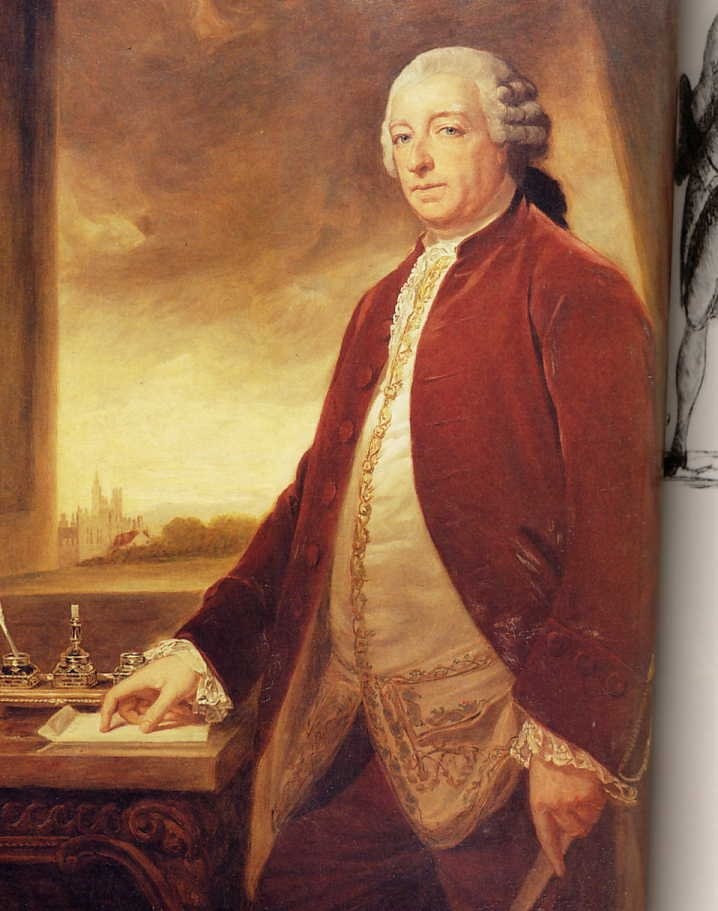
British General Sir William Howe commanded approximately 15,000 troops stationed in New York City in the summer of that year. Meanwhile, the British advanced on Albany from their positions in Canada, approaching the Patriot position on two sides – from the west and the north.
General John Burgoyne, who led approximately 9,000 men down Lake Champlain from Canada, was under the impression that Howe would march up the Hudson from New York, and attack Albany from the south – forming a three-pronged attack.
However, Howe was much more focused on capturing Philadelphia, and chose to turn south instead of helping Burgoyne.
Howe turns south
In July 1777, Howe and his men set sail for Pennsylvania from New York.
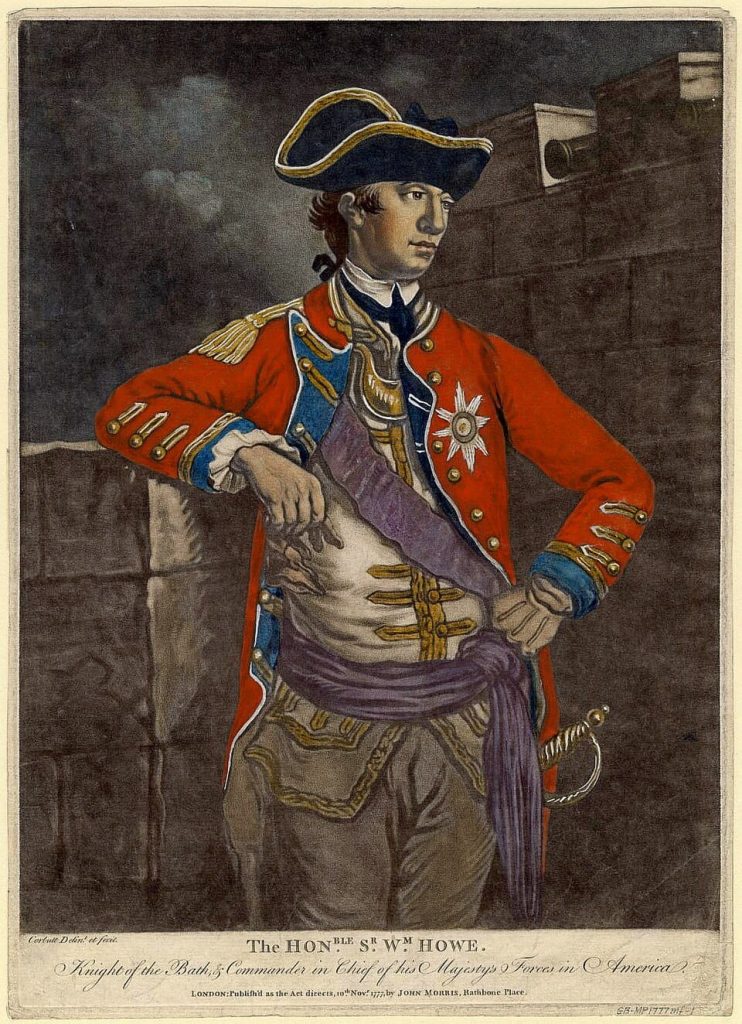
He arrived 34 days later, making a difficult landing in muddy conditions at present-day Elkton, Maryland, then known as Head of Elk.
George Washington had set up his forces at strategic positions along key river crossings between Head of Elk and Philadelphia. He believed that the British would struggle to make these crossings under fire, especially at locations such as Chadds Ford.
The main issue Washington was facing was that he initially believed Howe would not come to Pennsylvania – he thought the British commander would sail north up the Hudson to attack Albany instead.
Therefore, Washington was without many of his best troops, who he had sent to northern New York in anticipation of a stronger British attack on Albany.
Initial skirmishes and maneuvering
After landing at Head of Elk, Howe’s men started to push inland. As they moved north, they began to encounter Washington’s light divisions of advanced forces.
The first engagement occurred on September 3, at a location known as Cooch’s Bridge in Newark, Delaware. Facing a much larger opposition, including many German jaegers, American forces fell back.
Washington then retreated towards Wilmington. A small division was placed along White Clay Creek as a screen, again aiming to cause the British issues crossing a body of water, with the main body of troops stationed further behind.
Howe continued to advance, and another series of small engagements occurred from September 8 to 10, eventually forcing Washington and his approximately 15,000 men back towards Chadds Ford.
He positioned troops around Brandywine Creek, attempting to force Howe into a front-on attack on the Continental Army’s main line of defenses. Other crossing points, such as nearby Pyle’s Ford to the south, were also blocked off by smaller units.
However, Washington had in fact not covered all available crossing points, and due to poor American reconnaissance, Howe had better knowledge of the area than the Patriot Commander-in-Chief.
The battle
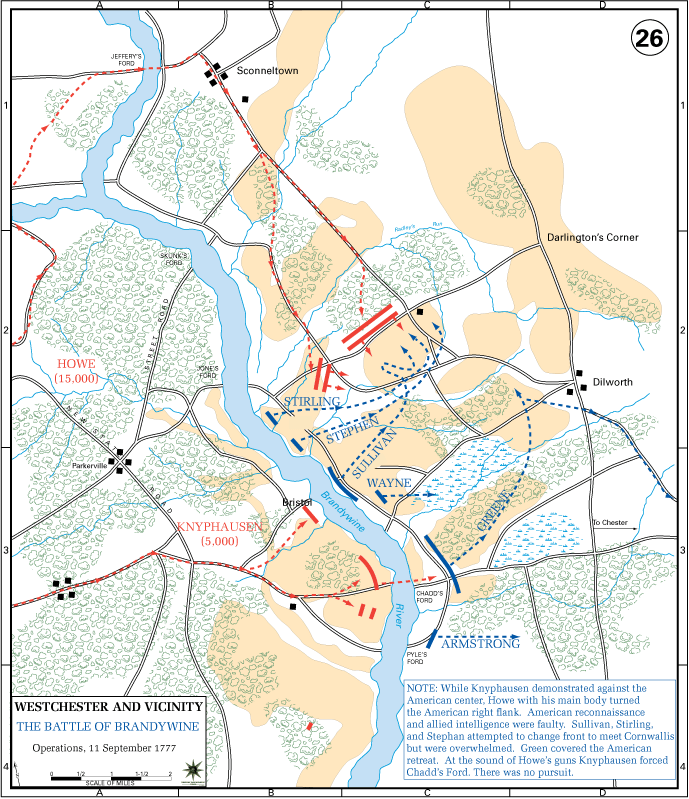
On the morning of September 11, 1777, approximately 7,000 men under the command of Hessian Wilhelm von Knyphausen attacked the American front at Chadds Ford.
While this was going on, 9,000 more troops marched north to Trimble’s Ford, then continued on to Jefferis Ford, crossing two branches of the Brandywine River, and allowing Howe to flank the Americans from the northwest.
Washington received intelligence that British units were moving north, but he was given conflicting reports, partly due to heavy fog in the area that morning. This, combined with a lack of knowledge of the crossing points the British were using, left the Americans unprepared for what would come next.
The British flanking maneuver, led by Charles Cornwallis, attacked the American right, and Washington’s units scrambled to form a cohesive front.
Bitter fighting ensued, centered around high ground near the Birmingham Friends Quaker Meetinghouse.
The Americans fought hard, but due to their initial disorganization, they were unable to resist the British advance.
Meanwhile, at Chadds Ford, by the late afternoon Knyphausen had begun to make progress, and the American front line was starting to falter.
Realizing that the situation could turn disastrous, Washington ordered a retreat, commanding his men to fall back towards the town of Chester.
The retreat was successful in large part thanks to the covering efforts of General Nathanael Greene’s rear guard forces, who counterattacked and held up the British, as well as Marquis de Lafayette’s work to rally and organize retreating troops.
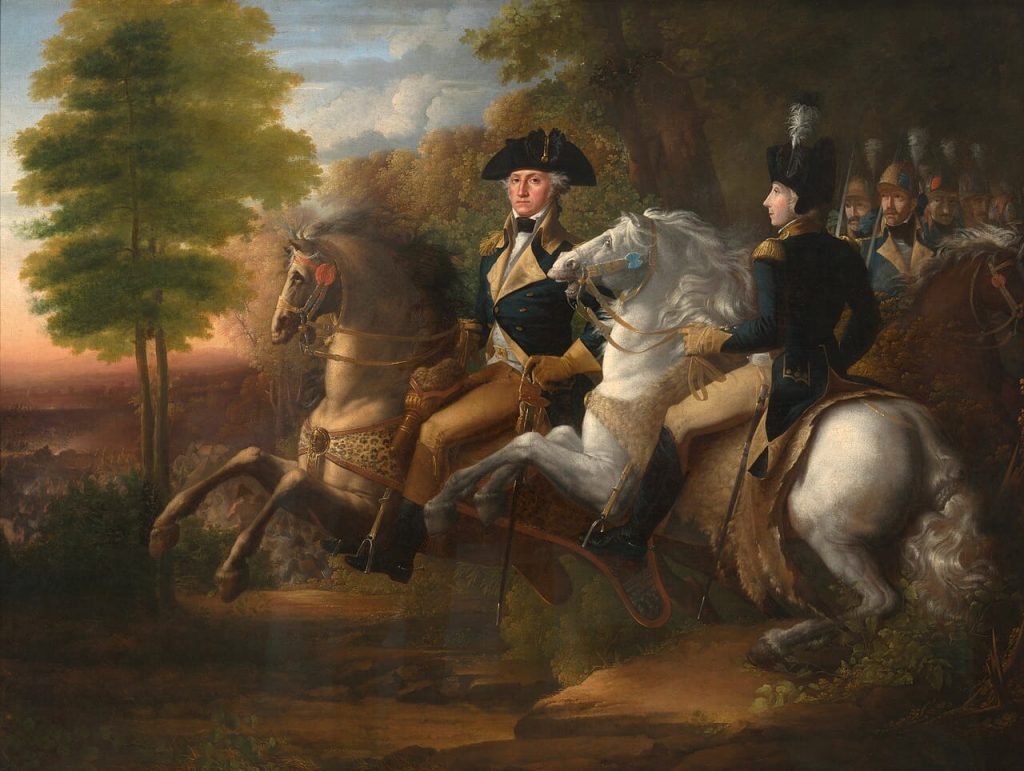
American forces eventually reached Chester, and were not pursued by the British due to poor light.
In total, the Americans lost an estimated 250 killed and 600 wounded. The British Army lost an estimated 93 killed and 488 wounded.
Significance
The Battle of Brandywine was a significant loss for the Continental Army. However, Washington’s troops showed that they could fight and move around the battlefield as an organized, cohesive unit, rather than acting as merely a ragtag militia.
Washington’s decision to retreat was crucial, as it enabled his army to recover, regroup, and continue fighting the Revolutionary War. After a few more smaller skirmishes with the British, such as the Battle of the Clouds on September 16, Washington withdrew to Valley Forge, PA in December 1777, to encamp for the winter with his men.
In the short term, the Battle of Brandywine opened the door for the British to capture Philadelphia, which they eventually occupied unopposed on September 26. The city was hastily evacuated by the Americans, and the Continental Congress was moved to the city of York, PA.
Though capturing Philadelphia was a morale boost for the British, it did not prove to be a strategically significant victory in the wider context of the war. The city was a key shipping and trade hub, and it was a loss to the Patriot side, but it did not crush colonial motivation to continue fighting in the way the British thought it would.
In the end, British defeat at the Battles of Saratoga – the ending of the campaign to capture Albany that Howe chose not to join – brought the French into the war, and as a result, the Redcoats evacuated Philadelphia to focus on protecting New York City just nine months after taking the position.
However, Washington’s loss of Philadelphia and his subsequent failure at Germantown did lead to immediate questions surrounding his leadership abilities. There was a plot to replace him as Commander-in-Chief with Horatio Gates during the winter of 1777-78, partly motivated by recent military losses, in an incident known as the Conway Cabal.
Facts
- Brandywine was the largest battle of the Revolutionary War based on the number of troops involved.
- The Battle of Brandywine lasted for 11 straight hours, making it one of the longest of the war.
- Marquis de Lafayette was wounded during the Battle of Brandywine, but kept rallying troops despite his injury. The battle marked his first involvement in combat during the American Revolution.
- William Howe was known for his tactic of splitting his army in two, sending a diversion to attack the enemy front, and having his remaining troops perform a flanking movement. He had done this previously at the Battle of Long Island.
- In their rush to retreat, the Americans left behind most of their best cannons. The British captured 11 of the Americans’ 14 total artillery pieces during the battle.