
Contents
About the author

Edward A. St. Germain created AmericanRevolution.org in 1996. He was an avid historian with a keen interest in the Revolutionary War and American culture and society in the 18th century. On this website, he created and collated a huge collection of articles, images, and other media pertaining to the American Revolution. Edward was also a Vietnam veteran, and his investigative skills led to a career as a private detective in later life.
Contents
Before George Washington became the first president of the United States on April 30, 1789, there were others who led the federal government in the time leading up to and after independence from Great Britain.
There were eight men who served a full term as president before Washington after the Articles of Confederation were ratified in 1781, or 14 including all leaders of the Continental Congress and Confederation Congress from 1774 onward.
The presidents before Washington
1. Peyton Randolph (Virginia, September 5 to October 22, 1774, and again May 10 to 24, 1775)
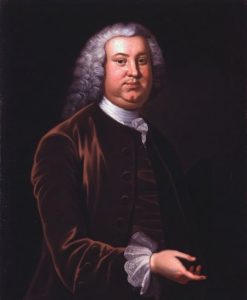
The First Continental Congress was held in Philadelphia beginning in September 1774, in response to the British Intolerable Acts.
Peyton Randolph, a politician and plantation owner, was elected by delegates as the first congressional president.
His responsibilities included presiding over debates, acting as speaker of the house, and managing parliamentary procedures.
Randolph had previous experience as the speaker of the Virginia House of Burgesses, making him an ideal candidate for the role.
He stepped down from the position on October 22 1774 to attend to urgent business matters in Virginia, before returning as the first president of the Second Continental Congress in May 1775 for a brief period.
2. Henry Middleton (South Carolina, October 22 to October 26, 1774)
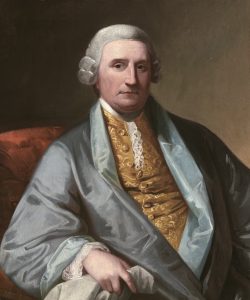
Henry Middleton was president of the First Continental Congress for a period of just five days, taking over from Peyton Randolph until the end of proceedings on October 26.
Middleton was also a plantation owner and politician, but held much less radical views than many of the other 13 congressional presidents.
He believed that reconciliation with Great Britain was possible, and stepped down from Congress entirely in February 1776 as it became clear that the colonies were moving towards independence.
3. John Hancock (Massachusetts, May 24, 1775 to October 31, 1777 and again from November 23, 1785 to June 5, 1786)
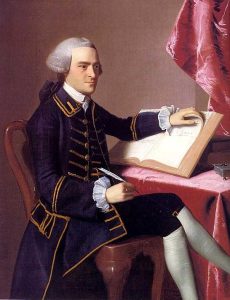
After Peyton Randolph resigned after just 14 days in the role, John Hancock became the second president of the Second Continental Congress, which acted as the first de facto government of America as the Revolutionary War began.
Hancock was an influential Patriot writer and politician, a member of the Sons of Liberty, and one of the wealthiest men in America at the time.
He oversaw the appointment of George Washington as commander-in-chief of the Continental Army, as well as the drafting and signing of the Declaration of Independence during his term.
Hancock later went on to serve as the first Governor of Massachusetts from October 25 1780 to January 29 1785, before being reelected as congressional president on November 23, 1785.
However, he never took the seat for his second term due to illness. David Ramsay and Nathaniel Gorham took on Hancock’s duties in his absence, before he formally resigned the position in May 1786.
Hancock later returned to the role of Massachusetts Governor from May 30 1787 to October 8 1793.
4. Henry Laurens (South Carolina, November 1, 1777 to December 9, 1778)
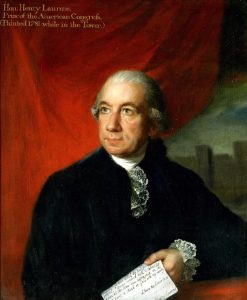
Henry Laurens was a merchant and plantation owner from Charleston (then, Charles Town), South Carolina.
During his term as president, Laurens oversaw the signing of the Articles of Confederation, America’s first constitution.
His term was marked by difficulties maintaining and supplying the Continental Army. In February 1778, France officially joined the war on the American side, helping to alleviate supply shortages.
After resigning from the position at the end of 1778, Laurens was captured by the British while traveling to the Netherlands, and became the only American to ever be held prisoner in the Tower of London. He was released in a prisoner exchange on the final day of 1781.
5. John Jay (New York, December 10, 1778 to September 27, 1779)
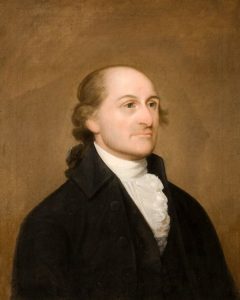
John Jay was a lawyer and politician who served in the First and Second Continental Congresses, before becoming president of the latter in December 1778.
His term was marked by a continued focus on the war effort, maintaining alliances, especially with France, and coordinating states’ resources to support the Continental Army.
After leaving the presidency, he was sent to Spain as Minister Plenipotentiary, helped negotiate the Treaty of Paris, became Secretary of Foreign Affairs, co-wrote The Federalist Papers, and served as the first Chief Justice of the United States.
6. Samuel Huntington (Connecticut, September 28, 1779 to July 6, 1781)
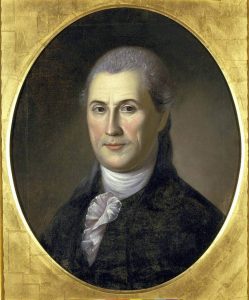
Like John Jay, Samuel Huntington was a lawyer, but was largely self-educated, and came from a more modest background than many of the other Founding Fathers.
During his time as president, he oversaw the ratification of the Articles of Confederation, which were finalized on March 1, 1781, creating the first constitution of the United States.
Huntington resigned because of poor health in July 1781. Samuel Johnston of North Carolina was elected after him but declined the office, so Thomas McKean was chosen instead.
7. Thomas McKean (Delaware, July 10 to October 23, 1781)
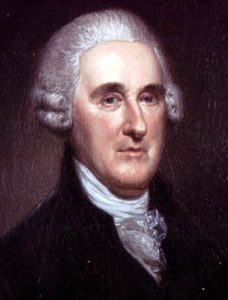
Thomas McKean was a lawyer and politician associated mainly with Delaware, though he was also deeply involved in Pennsylvania politics. He previously served in the Stamp Act Congress, the Delaware Assembly, the Second Continental Congress, and as president of Delaware.
Though his time in the role was relatively short, McKean presided over Congress during the final major military phase of the war, with British General Cornwallis surrendering after the Siege of Yorktown on October 19, 1781.
He resigned to serve as chief justice of the Pennsylvania Supreme Court.
8. John Hanson (Maryland, November 5, 1781 to November 3, 1782)
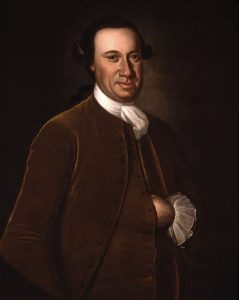
John Hanson was a Maryland plantation owner, businessman, and politician. Before becoming president of Congress, he served in Maryland’s legislature, state senate, and in the Continental and Confederation Congresses.
Some consider John Hanson to be the first of eight presidents before Washington, because he was the first president of the Congress of the Confederation elected to serve at least a full term (one year) after the Articles of Confederation were fully ratified on March 1, 1781. His official title was President of the United States in Congress Assembled.
The other seven of these eight presidents are listed below, plus John Hancock during his second term from November 23 1785 to June 5 1786 – though Hancock did not retake the office due to illness.
9. Elias Boudinot (New Jersey, November 4, 1782 to November 3, 1783)
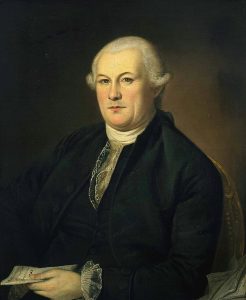
Elias Boudinot was a New Jersey lawyer and Patriot politician.
During his time in office, Boudinot oversaw a crucial period of diplomacy in American history as the Treaty of Paris was negotiated with Great Britain, eventually being signed on September 3, 1783.
This agreement officially marked the end of the Revolutionary War, making Boudinot’s presidency a crucial period of transition as the conflict wound down.
10. Thomas Mifflin (Pennsylvania, November 3, 1783 to November 30, 1784)
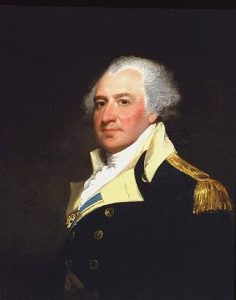
Thomas Mifflin was a soldier in the Continental Army who worked alongside George Washington, becoming the army’s first Quartermaster General, and eventually reaching the rank of Major General.
Mifflin’s presidency is best remembered for George Washington’s resignation from his role as commander-in-chief.
On December 23, 1783, Washington appeared before Congress at Annapolis and surrendered his command. Mifflin, as president of Congress, represented the civilian authority receiving that resignation.
Mifflin later went on to become governor of Pennsylvania.
11. Richard Henry Lee (Virginia, November 30, 1784 to November 4, 1785)
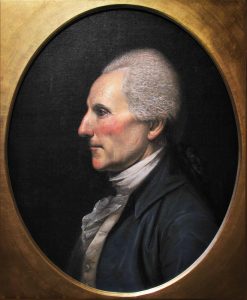
Richard Henry Lee was a Virginian politician who served in the House of Burgesses and both the First and Second Continental Congresses.
Among other presidents around this time, Lee aimed to help build the new nation in the post-war period, but ran into issues stemming from the lack of power afforded to the federal government by the Articles of Confederation.
He, along with Congress, struggled to effectively enforce federal law, especially relating to land rights and settlement processes.
Lee resigned in 1785 due to poor health.
12. Nathaniel Gorham (Massachusetts, June 6, 1786 to February 2, 1787)
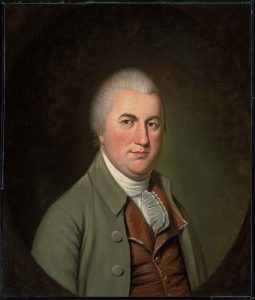
Having previously taken on the presidential responsibilities in John Hancock’s absence during his second term, Nathaniel Gorham officially became president on June 6, 1786, after Hancock formally resigned.
Gorham was a merchant and politician from Charlestown, Massachusetts. The most notable event of his term was Shays’ Rebellion in his home state, which the federal government struggled to control.
Having experienced firsthand the problems caused by the ineffectiveness of the federal government under the Articles of Confederation, Gorham went on to attend the 1787 Constitutional Convention, with the goal of creating a new, more robust constitution for the United States.
I do not know that I am at liberty to mention in any manner what the Convention has done—but to you in confidence I can say that they have agreed I believe unanimously that there ought to be a National Legislative Executive & Judiciary…
– Nathaniel Gorham, June 3 1787
13. Arthur St. Clair (Pennsylvania, February 2 to October 5, 1787)
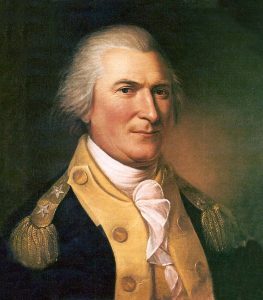
Arthur St. Clair was a veteran of the British Army during the French and Indian War who joined the Pennsylvania militia and later the Continental Army.
During his term, the Constitutional Convention was held in Philadelphia, with the goal of replacing the Articles of Confederation. Meanwhile, St. Clair oversaw the day-to-day running of the Confederation Congress.
St. Clair later became governor of the Northwest Territory, an area of land designated for westward expansion, which was formed by Congress under the Northwest Ordinance of 1787 during his term as president.
14. Cyrus Griffin (Virginia, January 22, 1788 to March 2, 1789)
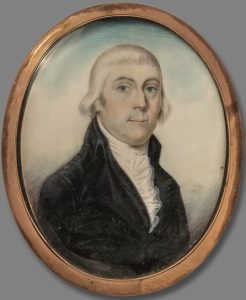
The last of the 14 presidents before Washington was Cyrus Griffin, from Richmond County, Virginia.
Griffin was a lawyer and judge who was involved in Virginia politics, having served in the Second Continental Congress and Confederation Congress. He also served as president of the Supreme Court of Admiralty, which dealt with maritime cases.
Griffin oversaw the final part of the transition to the new constitution, and the new office of president that it created.
He later served as a commissioner to the Creek Nation and became a federal judge for the District of Virginia.
Were these men really presidents?
These 14 men held the highest position in American politics at the time that they served. Officially, they were called the president, or more specifically, “President of the Continental Congress,” or “President of the United States in Congress Assembled” post-1781.
However, the presidency did not have the same powers or function in the same way as after George Washington took office.
Especially to begin with, the role was more ceremonial or administrative, though still important. Similar to the current Speaker of the House of Representatives, the president’s job was primarily to oversee debates between political representatives, manage administrative duties in Congress, and facilitate the political process.
After the Articles of Confederation went into effect in 1781, which effectively functioned as America’s first constitution, the president still had very little power.
They did not control an executive branch, as the modern-day U.S. President does. Instead, powers were left predominantly in the hands of the states.
The president could not command the army, enforce laws independently, veto legislation, appoint a cabinet, or govern separately from Congress.
They were also not elected to the position by the general population – instead, congressional delegates would elect the president. They did not act as the leader of their political party as the president does today.
After the Articles of Confederation were replaced by the U.S. Constitution, which came into effect on March 4, 1789, the role of president was defined as an executive authority that could control federal law enforcement, the military, and foreign policy, and who could also issue executive orders, appoint government officials, and issue pardons, among other powers.
In effect, the presidents before Washington were not presidents in the way that we know the role today.
However, they were presidents of the Continental and Confederation Congresses, and held the highest presiding role in the American national government before 1789.