Contents
About the author

Edward A. St. Germain created AmericanRevolution.org in 1996. He was an avid historian with a keen interest in the Revolutionary War and American culture and society in the 18th century. On this website, he created and collated a huge collection of articles, images, and other media pertaining to the American Revolution. Edward was also a Vietnam veteran, and his investigative skills led to a career as a private detective in later life.
Contents
The Federalists and Democratic-Republicans were the first two political parties in the United States.
Beginning in the early 1790s during George Washington’s first term, the two factions were locked in a bitter political rivalry over the future of the country.
Summary
| Party | Federalists | Democratic-Republicans |
|---|---|---|
| Leader | Alexander Hamilton | Thomas Jefferson |
| Officially formed | 1789 | 1792 |
| Members | Educated, wealthy elites, mostly in New England and the Middle Colonies - notable members included John Adams and John Jay | Farmers and plantation owners, especially in the west and south - notable members included James Madison and James Monroe |
| Government policy | Favored strong federal government, less supportive of popular rule, believed that the educated and wealthy made the best leaders | Favored strong state governments, more supportive of popular rule and greater political participation among the white male population |
| Economic policy | Favored the creation of a national bank, and investment in manufacturing and trade | Opposed the creation of a national bank, favored investment in agriculture and farming |
| Foreign policy | Favored stronger relations with Great Britain in order to encourage trade | Favored stronger relations with France in keeping with Revolutionary ideals |
| Constitutional policy | Broad interpretation of the constitution, meaning the government could take advantage of powers implictely granted to it | Strict interpretation of the constitution, meaning the government should only use the powers explicitely granted to it |
Historical context
After the U.S. Constitution was ratified on June 21, 1788, the first election was held from December 15, 1788, to January 7, 1789.
Voting was restricted to white males who met certain wealth thresholds in the majority of cases, and these voters chose state electors. In some states, state legislatures chose the electors rather than the voting public.
The state electors then voted on who would become president and vice president on February 4, 1789.
George Washington won the ballot unopposed, with John Adams becoming vice president. The president was inaugurated on April 30, 1789.
At this stage, political parties did not exist in the way we know them today. Neither the populace nor state electors voted for or as a political party, though informal factions did exist in Congress.
However, during the beginning of the 1790s, two political parties began to form as congressional representatives disagreed over the best path to take for the future of the United States.
Federalists
Philosophy
As the name implies, Federalists supported the creation of a strong federal government.
Their members of Congress sought to implement a wider interpretation of the Constitution, rather than taking its words at face value. This meant that the federal government took on more responsibility, rather than staying limited in its actions and leaving more duties up to the states.
The most notable example of this was that the Federalists wanted to form a national bank, under Alexander Hamilton’s fiscal plan for the United States.
The Constitution did not explicitly give the federal government the power to do this. However, as Secretary of the Treasury, Hamilton believed it necessary in order to help businesses access loans and build the nation’s credit, allowing the United States to more easily borrow money from other countries and manage its war debts.
The Federalists aimed to maintain good relations with Great Britain, as the British Empire was still the world’s largest international trading power at the time, and they believed that trading with Britain would be beneficial for the American economy.
The party’s supporters and constituents were predominantly from New England and some of the Middle Colonies: areas with significant merchant economies, focused on manufacturing and trade. The Federalists aimed to promote this type of economic activity to help build the new nation.
Compared to the Democratic-Republicans, the Federalists were somewhat elitist when it came to their preferences for who would decide the future of America.
They were not anti-democratic in the sense of wanting a monarchy, but they were suspicious of too much direct popular rule. They feared that ordinary voters could be misled by passion, demagogues, or mob politics. Therefore, they made little effort to encourage wider political participation in society.
Actions
- Established the First Bank of the United States in February 1791, which collected taxes, loaned money to the government and businesses, and held government funds.
- Established the United States Mint in April 1792 to control currency at the federal level.
- Opted to use federal force (under Washington’s orders) to put down the Whiskey Rebellion in 1794.
- Supported Jay’s Treaty in 1795, an agreement between the U.S. and Great Britain that aimed to avoid conflict between the two nations and settle unresolved issues from the Revolutionary War.
- Passed the Alien and Sedition Acts in 1798, despite huge opposition. These acts criminalized certain criticisms of the federal government, and targeted critics, including Democratic-Republicans.
- After leaving power in 1800, the Federalists opposed the War of 1812, instead favoring reconciliation with Great Britain.
Members
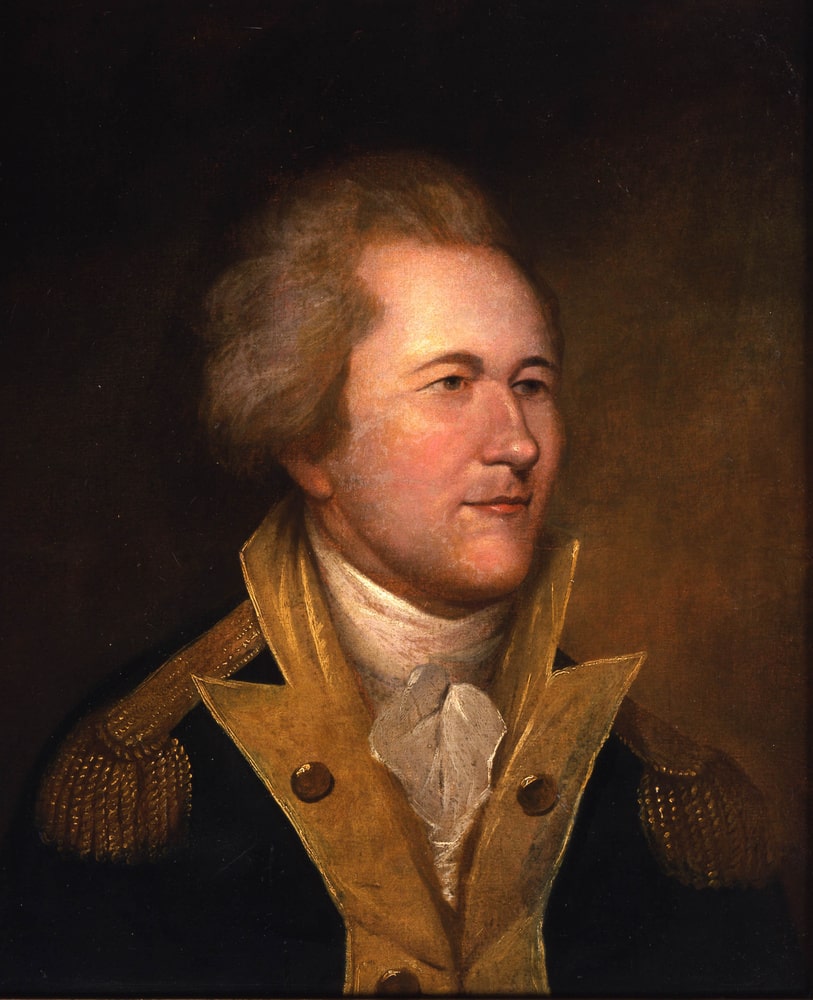
Alexander Hamilton is widely considered to have been the leader of the Federalist Party, and the architect of its ideology.
George Washington was not officially a member of any political party, but his policies were widely aligned with those of the Federalists.
John Adams, also a Federalist, was vice president, and as a result, the party had more power in Congress during Washington’s presidency than the Democratic-Republicans.
The term “federalists” was first used to refer to those who supported ratifying the U.S. Constitution from 1787-89, thereby giving the federal government significantly more power compared to under the old Articles of Confederation.
The original federalists were largely made up of the same group of people, including Alexander Hamilton, John Jay, John Adams, and George Washington, but did not officially become the Federalist Party until 1789.
There were also “anti-federalists,” who opposed ratifying the Constitution in favor of states’ rights. Some anti-federalists later became Democratic-Republicans, but the groups were not identical.
Dissolution
After having a significant majority in Congress during Washington and Adams’ presidencies, things changed after 1800 for the Federalist Party.
In the fourth presidential election, Thomas Jefferson defeated John Adams, and the Democratic-Republicans came to power.
Many Americans saw the Federalists as too elitist, pro-British, and hostile to popular democracy, due to decisions such as passing the Alien and Sedition Acts.
The party was badly damaged by its opposition to the War of 1812 and eventually disappeared as a major entity at a federal level, officially dissolving in 1825.
Democratic-Republicans
Philosophy
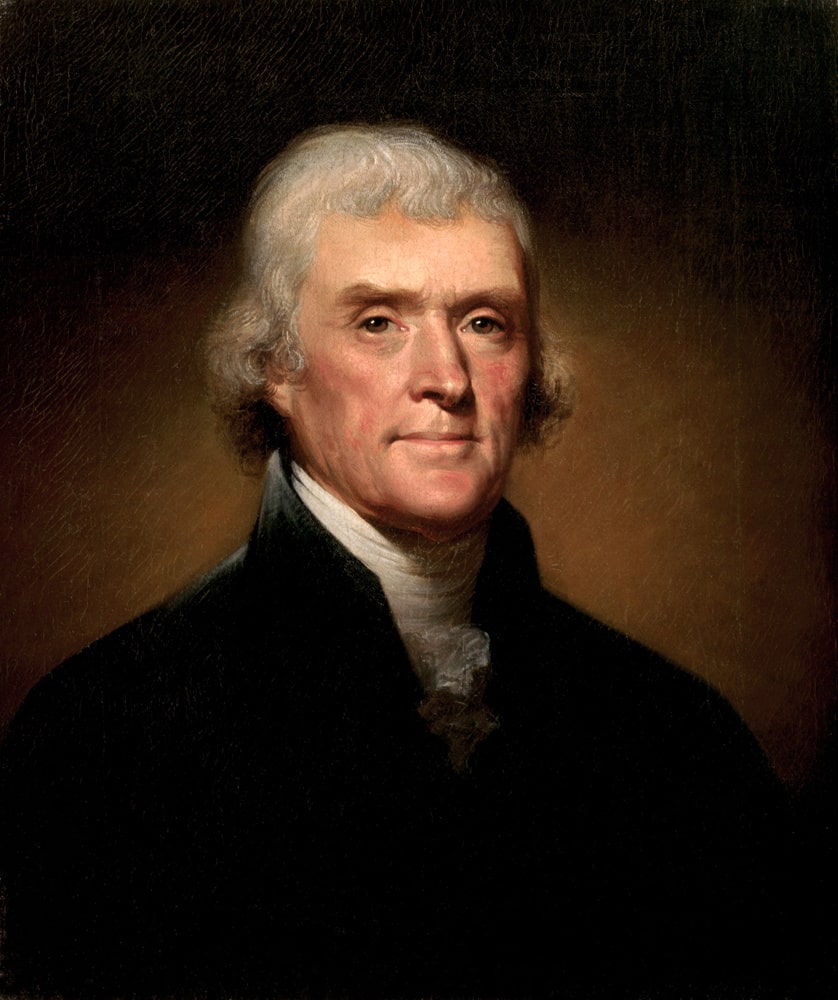
The Democratic-Republican Party was formed in opposition to the Federalist Party’s policies, and was led by Thomas Jefferson.
The party believed that America should be primarily an agrarian society, and supported states’ rights and limited federal government. They argued for a more literal interpretation of the Constitution, limiting the amount of power that the federal government wielded.
As a result, the party was vehemently opposed to Alexander Hamilton’s economic plan and the Federalists’ broad interpretation of the Constitution.
They instead believed that the states should maintain control over the financial and banking systems. More broadly, the party was distrustful of public debt, national banks, and financial speculation.
Jefferson argued that farmers were more virtuous and independent than people who invested money or owned factories or other businesses. In his view, an agricultural republic was best because citizens who owned land were the most invested in the nation’s future.
Cultivators of the earth are the most valuable citizens. They are the most vigorous, the most independant, the most virtuous, and they are tied to their country and wedded to it’s liberty and interests by the most lasting bands.
– Thomas Jefferson in a letter to John Jay, August 23 1785
As a result, the Democratic-Republican base was more centered on the South, with support among farmers and plantation owners. These farmers tended to be people taking on debt from wealthier merchants and elites further north, and therefore were opposed to an expansion of the banking system, which they perceived could result in financial exploitation.
The party also placed much more emphasis on wider political participation than the Federalists, at least among the white, male portion of the population.
Jefferson also had little interest in maintaining strong ties with Great Britain for the purposes of facilitating trade. Instead, his party aimed to build closer relations with France, which had joined America in becoming a republic in 1792.
Actions
- Opposed the establishment of the First Bank of the United States, arguing that the federal government did not have the power to create it under the Constitution.
- Opposed Jay’s Treaty in 1795, arguing it was too favorable to Great Britain.
- Fought the Alien and Sedition Acts, which helped the Democratic-Republicans win the 1800 election.
- Wrote the Virginia and Kentucky Resolutions, arguing that states could protest unconstitutional actions of the federal government.
- Once in power, the Democratic-Republicans rolled back Federalist taxes that they perceived as overreach, such as the 1791 whiskey tax, which led to the Whiskey Rebellion.
- Completed the Louisiana Purchase in 1803. This contradicted Jefferson’s earlier position – he previously argued for a strict interpretation of the Constitution and limited federal government, but the Constitution did not specifically grant the power to purchase foreign lands at public expense.
- Led the country into the War of 1812. This again eroded the party’s position on limited federal government, as power was centralized in order to fight the war.
Members
The Democratic-Republicans were led by Thomas Jefferson, and other notable members included many future presidents and vice presidents, such as James Madison, James Monroe, John Quincy Adams, and Aaron Burr.
While the Democratic-Republican Party was officially formed in 1792, its members informally opposed many Federalist policies much earlier than this, beginning in 1789.
The party eventually split into two factions after the 1824 election: the National Republicans (which later became the Whigs) and Jacksonian Democrats (which later became the Democratic Party).