American Colonial Clothing 1775-1800
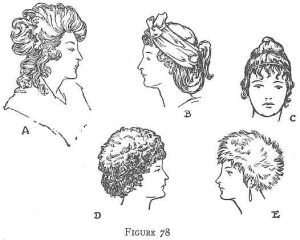
“ Editor’s note The following is a chapter from a book “Early American Costume” by Edward Warwick and Henry C. Pitz. It illustrates and explains the types of clothing worn…

Everything you've ever wanted to know about the American Revolution

Read books written about the American Revolution.
“ Editor’s note The following is a chapter from a book “Early American Costume” by Edward Warwick and Henry C. Pitz. It illustrates and explains the types of clothing worn…

“ Editor’s note The following is a chapter from a book “Early American Costume” by Edward Warwick and Henry C. Pitz. It explains what types of clothes were common in…
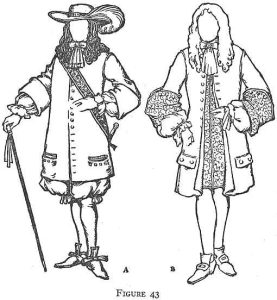
“ Editor’s note The following is a chapter from a book “Early American Costume” by Edward Warwick and Henry C. Pitz. It explains what types of clothes, wigs, and accessories…
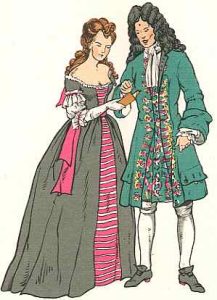
“ Editor’s note The following is a book “English Costumes of the Eighteenth Century” written by James Laver, with illustrations by Iris Brooke. It details some common fashions and types…

Chapters I. SOURCES OF INFORMATION This list includes most of the authorities consulted. The abbreviations used in the footnotes are here indicated. Other works, cited only once or twice, are…
Chapters In the study of so closely contested a struggle as the American Revolution, where even a comparatively trivial circumstance might have turned the scale, it is interesting to examine…
Chapters The lot of the prisoner of war has always been an unhappy one at best; in early times put to the sword, at a later day enslaved, and even…
Chapters Although the surrender of Cornwallis virtually put a stop to military operations on land, hostilities on the sea continued until the conclusion of peace. Notwithstanding the fact that the…
Chapters The frigate Alliance, Captain Barry, was made ready at Boston for another voyage to France as soon as the court martial of Captain Landais was over. There was the…
Chapters After his arrival at L’Orient in February, 1780, Captain Jones had to endure another long period of waiting on shore, but was occupied for some time in giving the…
Chapters South Carolina and Georgia, far from the seat of the Continental government and from the headquarters of the army, were peculiarly exposed to attack, yet for more than two…
Chapters The frigate Alliance, Captain Landais, with Lafayette on board, arrived at Brest February 6, 1779, after a passage of twenty-three days from Boston. The voyage had not been without…
Chapters For the third time within a century a military expedition of importance and magnitude, considering the resources of the community, was fitted out at Boston for service against a…
Chapters Taking into account the heavy losses of the last two years, the Continental navy still showed vigor at the opening of 1779 and rendered valuable service during the year.…
Chapters Captain John Paul Jones brought the Ranger to France in December, 1777, eager to carry the war upon the enemy’s shores. He wrote to the Marine Committee: “It is…
Chapters Notwithstanding the reverses of the Americans on land and sea during the previous year, it is evident that the British, about the beginning of 1778, were finding the subjugation…
Chapters From the beginning of the Revolution the eyes of America and of France were directed towards one another across the sea. With instructions dated March 3, 1776, Silas Deane…
Chapters Owing to various causes the thirteen frigates provided for by Congress in 1775 were much delayed in fitting out and going into commission, and some of them never got…
Chapters In the days when the frontier severing Canada from New England and New York was a wilderness, the only easy avenue of communication was by way of Lake Champlain…
Chapters Having followed the movements of two fleets in service during 1776, there remain to be considered various cruises and actions of a number of single vessels, public and private,…
Chapters The Naval Committee was busy during the winter of 1775 and 1776 fitting out the four vessels which had been purchased in November – the Alfred, Columbus, Andrew Doria,…
Chapters General Washington took command of the American army at Cambridge July 3, 1775, and the siege of Boston was closely maintained at every point except on the water side…
Chapters The events already related took place under the stress of circumstances, most of them unauthorized by Continental or Provincial Congress. It is now necessary to interrupt the narrative of…
Chapters The Americans of the eighteenth century were notably a maritime people and no better sailors were to be found. The British colonies were close to the sea, and were…
Chapters It is now time to trace the history of the negotiations between France, Spain, and England, and see the effect produced on them by the agreement made between England…
Chapters In the conduct of Vergennes during the negotiations there was little of which a reasonable man could complain. Adams’s belief, that France nearly bankrupted herself in a Machiavellian scheme…
Chapters After the capture of Yorktown the time had at last arrived when there was a possibility of closing the long contest for American independence. Nearly two years elapsed before…
Chapters At the beginning of the Revolution the colonists knew little of the French, and what they did know was not reckoned in their favor. French Canadians had been objects…
Chapters The surrender of Yorktown proved to be the end of the Revolutionary War, but its importance was not at first realized, even by the victors. The French army remained…
Chapters When compliments had been exchanged with due formality, plans for the campaign were discussed, and de Grasse agreed to furnish assistance as Washington desired except in one respect. Washington…
Chapters On the 14th of August the momentous letter of the Comte de Grasse reached Washington’s headquarters. The situation required immediate decision, upon which might depend, and in fact did…
Chapters We must now follow the fortunes of the expedition which had sailed from France under the command of the Comte de Grasse, and which was to exercise a decisive…
Chapters On May 10, 1781, the Concorde reached Newport, bringing Rochambeau’s son and the Comte de Barras, who was to succeed Ternay in command of the French fleet. The intelligence…
Chapters Rochambeau’s son had been chosen to convey to the French government the result of the deliberations at Hartford. He did not sail at once, for there was still hope…
Chapters In the mean time preparations for the expedition that was to go to the relief of Washington’s army were carried on in France with vigor. The French government was…
Chapters The unfortunate result of the expedition conducted by d’Estaing added to the discouragement which was now widespread in the country. For almost two years the colonists had been allied…
Chapters The French ministers had anticipated that a treaty with England’s rebellious colonies would be followed by war with England, and in this expectation they were not disappointed. There was…
Chapters The new republic was now a recognized ally of the ancient monarchy, and this recognition was at once followed by sending to the states an accredited diplomatic representative. For…
Chapters Franklin’s presence gave to the negotiations for French support an importance they had not possessed when Deane, with an ill-defined errand, had been the sole representative of the States.…
Chapters Many reasons united in leading France to espouse the cause of the American colonists. Hatred of England and a desire to lessen her power and obtain revenge for the…
Chapters Of the French who wished to enlist in the American cause La Fayette proved the most useful friend, and was among the most illustrious in rank. But there were…
Chapters Apart from the aid surreptitiously given by the French government, and the supplies sent over by Beaumarchais and other friends and speculators, there were numerous offers from a class…
Chapters It was not only by assisting the enterprising house of Roderigue Hortalez and Company that the French government sought to help the colonists: it rendered aid quite as important…
Chapters Deane had gone to Paris in search of assistance, with no official position. But immediately after the Declaration of Independence it was decided to send accredited representatives of the…
Chapters In relating the part taken by Beaumarchais in behalf of the United States, and the disasters in which his zeal involved him, we have been carried beyond the time…
Chapters The part taken by Beaumarchais in furnishing assistance to American patriots is a picturesque chapter in our early history, while the treatment he received from the people he befriended…
Chapters Thus far the colonists had no official representation at the court of France; their national existence had hardly assumed definite form; but in the summer of 1776 an envoy…
Chapters The young King received the popular favor which is readily bestowed on royalty combined with youth. Nothing could be worse than the old King, and the people looked with…
Chapters The terms of the Treaty of Paris were galling to French pride, and it was certain that French statesmen would seek revenge whenever there was reason to suppose that…
Chapters Whether the American colonies would have succeeded in their struggle for independence if they had not received aid in men and money from France, is an interesting and not…
Chapters On Friday the 6th of February, 1778, plenipotentiaries met in Paris to sign a treaty for which there had been no precedent in history, and of which there has…
A short time after the refusal of the Massachusetts Legislature to rescind the Circular Letter of February 11, 1768, relating to the imposition of duties and taxes on the American…
The success of the Americans at King’s Mountain,* over the forces of Ferguson and Depuyster, has been the subject of numerous ballads. The one subjoined was written a short time…
The author of these verses, Colonel David Humphreys,* “the soldier-poet of the revolution,” was born at Derby, Connecticut, in the year 1752, and graduated at Yale College in 1771. On…
This ballad, by Robert Burns, is familiar to every one. Chambers, in his Life and Works of the Poet, says, the production “is curious, as an example of that brief…
The following composition was originally intended to be sung on the Thanksgiving Day, appointed in consequence of the peace between the United States and Great Britain in 1783, but was…
On Thursday night, the nineteenth of December, at 10 o’clock, off the Delaware, the British ships, Quebec, Diomede and Astrea, carrying ninety-eight guns, fell in with the American ship South…
Several songs were composed to commemorate the surrender of the royal army at Yorktown. The one subjoined was published a short time after the event, adapted to the air “Maggie…
This song, to the tune of Yankee Doodle, commemorating the campaign of Cornwallis in America, appeared soon after his surrender. The author is unknown. The Dance* CORNWALLIS led a country…
On the evening of the twenty-first of July, seventeen hundred and eighty-one, a party of Refugees embarked at Lloyd’s Neck, on Long Island, and landed on the Connecticut shore the…
The Soldier at Home FROM noise of camps once more I come, To snatch from care a short repose; All hail thou tranquil much lov’d home, That war nor dread…
This production was written in America, and published in a music sheet, entitled “New Year’s Day, 1781, to the tune “Get you gone, raw head and bloody bones.” It also…
This “address to the vile traitor” was published in the Pennsylvania Packet, October 24th, 1780. To the Traitor Arnold ARNOLD ! thy name, as heretofore, Shall now be Benedict no…
The adventure of this gallant officer, commemorated in the subjoined ballad, is connected with the conspiracy of Arnold. The authorship of the song is unknown, as is the case of…
The incidents connected with the capture and trial of Major Andre are well known. Many songs have been written, lamenting his unhappy fate. The one subjoined we copy from a…
This ballad was written by Major John Andre,* and first published in the Royal Gazette. It commemorates the attack of General Wayne, upon the Refugee’s Block House, situated on the…
These lines were addressed to the females of Pennsylvania and New Jersey, “who illustrated the nobility of their sentiment and virtue of their patriotism, by generous subscriptions to the suffering…
The author of these sprightly verses is not known. In the “New Hampshire Gazette” they appear, with the following note to the printer: “By inserting this in your next paper,…
The reduction of Charleston, South Carolina, by the British, in 1780, was the subject of numerous songs and poems. The subjoined specimen was written by an officer of the royal…
This song was transposed by a refugee, and intended for the loyalists without the lines, while D’Estaing was in Georgia; but it was not published until sometime after the French…
This is one of the best convivial songs produced during the war. Its authorship has been attributed to Henry Archer,* a native of England, who emigrated to America in 1778,…
This song was published in the Pennsylvania Packet, at Philadelphia, as “A song made by a Dutch lady at the Hague, for the sailors of the five American vessels at…
This satire first appeared at London, where it was written by “a true friend of the King and the Colonies.” It was reproduced in America, in 1779, on a music…
This ballad commemorates the attack upon Savannah. It appeared in Rivington’s Gazette, as “A new song to an old tune, written by a Yankee, and sung to the tune of…
Count D’Estaing, with his fleet of twenty sail, reached the coast of Georgia early in September, 1779. Soon after his arrival, a plan was concerted with General Lincoln, to make…
There are various versions of this sarcastic “English ballad.” The subjoined copy differs from the original, first published in the London Magazine, in 1778, in one particular only*. The writer…
This loyal song appeared originally in England. Rivington published it in the Royal Gazette, in November, 1779, and afterwards on a ballad sheet, with the chorus, “Derry Down.” A New…
“Sir Harry’s Invitation” was written by Philip Freneau. We have it in a ballad sheet, dated 1779. The Invitation COME, gentlemen tories, firm, loyal, and true, Here are axes and…
These verses were published in the Royal Gazette, in March, 1779, as “A Song, written by a refugee on reading the King’s speech, and sung at the Refugee Club, in…
These verses were composed by Philip Freneau, a native of the city of New York. Ile was born on the second of January, 1752, and died December 18, 1832. He…
The Old and the New WHAT though last year be past and gone, Why should we grieve or mourn about it? As good a year is now begun, And better…
“Lord North’s Recantation” was written by “a gentlemen of Chester,” England, and first appeared in the London Evening Post. The appendix to the “Political Duenna” contains it, as do many…
William Billings, the author of the subjoined hymn, was born in Boston, Massachusetts, on the seventh of October, 1746. He is more celebrated, as the earliest native writer of music…
Rivington first published this production, in the Royal Gazette, as “A fable addressed to the Americans, upon their treaty with France.” It afterwards appeared as “A fable, in the way…
This humorous ballad commemorates the attempt made upon Rhode Island, by the combined forces of Count D’Estaing, with the French fleet, and General Sullivan, in command of the American forces,…
The author of this humorous ballad is unknown. It was written at Charleston, South Carolina, a short time after the event it commemorates, and published in the ministerial issues and…
GREAT Washington, thou mighty son of Mars, Thou thund’ring hero of the rebel wars ! Accept our thanks for all thy favors past; Our special thanks await thee for the…
The ministerial press in America embraced every opportunity to ridicule the motives of the most prominent patriots of the Revolution, and very often exceeded the bounds of truth, or even…
Early in January, 1778, David Bushnell, the inventor of the American Torpedo, and other submarine machinery, prepared a number of “infernals,” as the British termed them, and set them afloat…
The American women, daring the revolution, excelled their nature. Europe heard, with wonder and regret, of their constancy and devotion to the cause of liberty; and their spirit and firmness…
This song was published in the Royal Gazette, at New York, with the accompanying remarks: “Observing in a late paper a song written for the British Light Infantry, 1 introduced…
This satirical song, entitled, “The Halcyon Days of Old England, or the wisdom of administration demonstrated; adapted to the tune of ‘Ye Medley of Mortals,'” was written in England, and…
Capt. Smyth, the author of this bold and loyal song, was an in Simcoe’s Queen’s Rangers. Many of his compositions were published during the war. The present one first appeared…
The defeat of General Burgoyne caused great alarm and uneasiness in England. Parliament soon after that event sent commissioners to the Continental Congress, with proposals for a mutual adjustment of…
This poetical “array return” was first published in the “Iris;* (June, 1841,) from the original MS. in the possession of GEORGE H. MOORE, one of the editors of that periodical.…
A very few ballads were published during the year 1777. “For some reason the Muse is asleep,” says the editor of the New Jersey Journal, shortly after the defeat of…
This ballad was known during the revolution, as the “North Campaign,” “Gates’ Song,” and “A Song for the Red-Coats.” It has been attributed to a “private of Colonel Brook’s regiment,”1…
On the fourth of July, 1777, General Burgoyne issued a proclamation from his camp, near Ticonderoga, intended to spread terror among the Americans. But it was so pompous and bombastic,…
This song “was sung before General Sullivan and a few respectable gentlemen, at Portsmouth, New Hampshire, after the battle of Trenton.” General Sullivan’s Song HARK, the loud drums, hark, the…
The following bold lines are taken from the “Craftsman, or Say’s British Journal.” The American newspapers, both loyal and whig, generally republished them. To Britain BLUSH Britain ! blush at…