
Contents
About the author

Edward A. St. Germain created AmericanRevolution.org in 1996. He was an avid historian with a keen interest in the Revolutionary War and American culture and society in the 18th century. On this website, he created and collated a huge collection of articles, images, and other media pertaining to the American Revolution. Edward was also a Vietnam veteran, and his investigative skills led to a career as a private detective in later life.
Contents
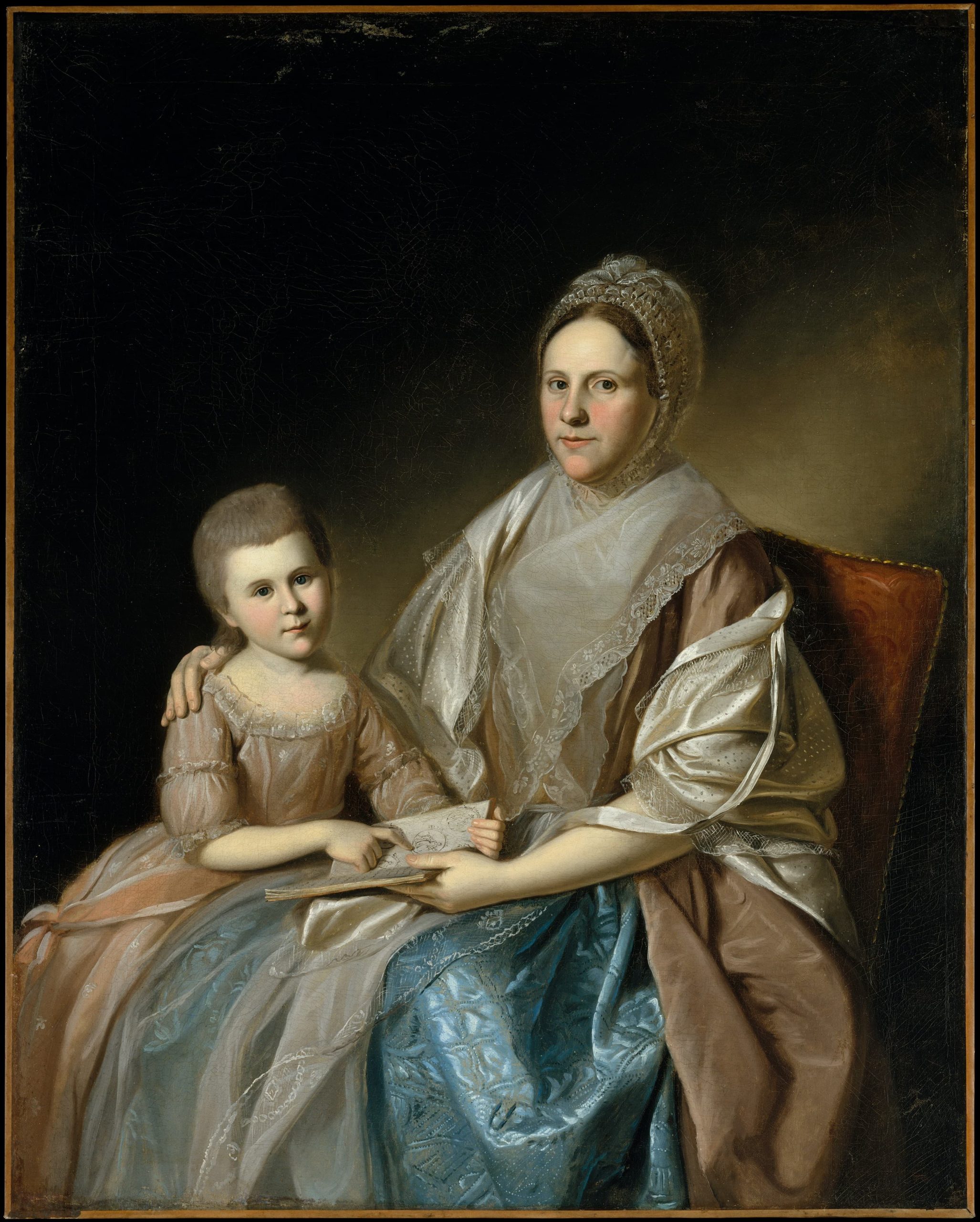
Republican Motherhood refers to an ideology centered around the idea that women should raise patriotic, virtuous children for the good of America after the United States gained independence from Great Britain.
Historical context
Throughout the history of colonial America, women had significantly fewer rights than men.
- Women could not run for political office.
- Women could not vote (with very limited exceptions).
- Married women could not own land or most other types of property.
- Women received a lower quality of education than men.
- Women were excluded from the most prestigious or high-paying jobs in society, in large part due to a lack of access to education.
In many ways, women were treated as second-class citizens in the lead-up to the American Revolution. They were largely expected to stay at home, raise children, and look after the household.
However, as the Revolutionary War began, women’s responsibilities expanded somewhat.
As men left home to fight, women ended up taking on tasks that were necessary for the war effort, including running the family farm or business, making munitions, and taking care of the sick and wounded.
Republican Motherhood
Beginning with the Declaration of Independence in July 1776, America began to establish itself as a separate country: a republic, independent from the British monarchy.
In the late 1770s and 1780s, politicians and educators began to consider the role that women and mothers should play in establishing the new country on the right footing, especially white women from middle to upper-class backgrounds.
This debate was centered around nationalism and parenthood. Spearheaded by voices such as Benjamin Rush in his 1787 essay Thoughts Upon Female Education, it was argued that a greater emphasis on women’s education was needed so that the first children raised in the United States would have the characteristics needed for the country to flourish.
Women were increasingly expected to understand history, politics, religion, morality, and civic virtue, so that they could pass these values onto their children.
In a monarchy, subjects obey the king or queen, but in a republic, citizens are responsible for governing themselves through the democratic process. Therefore, mothers were expected to raise children who had the virtue, discipline, patriotism, and moral character needed for republican society to survive.
The equal share that every citizen has in the liberty and the possible share he may have in the government of our country make it necessary that our ladies should be qualified to a certain degree, by a peculiar and suitable education, to concur in instructing their sons in the principles of liberty and government.
– Benjamin Rush, 1787
This movement later came to be labeled “Republican Motherhood” by historian Linda Kerber in 1976.
As a result, beginning in the 1780s, and accelerating from 1810 to 1840, large numbers of women’s schools opened around America, and many girls became the first in their families to receive a formal education. Figures such as Abigail Adams played a particular role in advocating for access to women’s education.
Effect on women
The effect of Republican Motherhood on women in late 1700s and early 1800s America was measurable but limited in scope.
Although girls’ education expanded in the first few decades of the history of the United States, boys typically still received a higher quality of education, and women still had significantly fewer rights than men.
During wartime, women’s duties and responsibilities expanded into other areas necessary for the war effort, but once the fighting was over, they were expected once again to focus on domestic duties – specifically, raising the right type of children for the new nation.
However, toward the second half of the 1800s, the women’s rights movement started in America, partly as a result of some of the educational advancements that Republican Motherhood had helped to establish.
Beginning with the Seneca Falls Convention in 1848, women’s rights groups began to argue that as educated members of the population, women should have the right to vote, retain property rights in marriage, and take on jobs requiring a higher level of education.
These movements eventually led to a gradual increase in women’s rights toward the end of the 19th century, before women eventually received the right to vote at a national level in 1920.